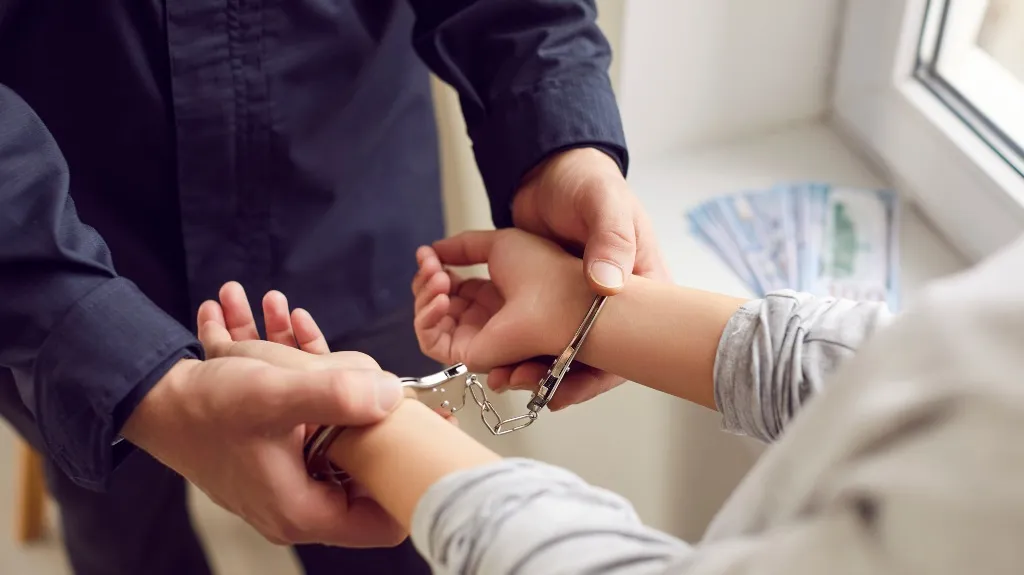
Carrying a concealed firearm under California Penal Code § 25400 looks like a single offense on its face. In practice, it sits at the intersection of statute and constitution. Post-Bruen CCW reform under SB 2, a multi-tier punishment scheme that turns ordinary cases into mandatory felonies based on a single fact, and federal firearm-prohibition consequences that survive any state-court resolution all converge on this one statute. If you are facing PC § 25400 charges in Murrieta, Temecula, Menifee, Lake Elsinore, Wildomar, Winchester, Canyon Lake, or French Valley, the case will move through the Southwest Justice Center, and the decisions that determine sentence exposure happen long before any trial date.
Understanding which subdivision of PC § 25400(c) the District Attorney will charge — and why — is the first step. PC § 25400 is not a generic “wobbler.” It is a seven-tier punishment scheme with five mandatory-felony triggers, one wobbler trigger, and one residual misdemeanor. The same conduct can be filed as a misdemeanor or as a straight felony depending on a single underlying fact, and the federal and immigration consequences often outweigh the state sentence itself. The Law Office of Nic Cocis has defended firearm offenses across Southwest Riverside County for over 25 years.
What PC § 25400 Actually Prohibits
PC § 25400(a) makes it unlawful to carry a firearm capable of being concealed on the person in three distinct ways:
- PC § 25400(a)(1) — carrying concealed within any vehicle under the defendant’s control or direction
- PC § 25400(a)(2) — carrying concealed upon the defendant’s person
- PC § 25400(a)(3) — causing to be carried concealed within any vehicle the defendant occupies
The statute reaches only firearms capable of being concealed on the person as defined in PC § 16530 and PC § 17030 — generally pistols, revolvers, and firearms with a barrel less than 16 inches in length. Long guns such as rifles and shotguns fall outside § 25400 and are governed by separate statutes (most notably PC § 25850 for carrying loaded firearms in a public place, and PC § 26350 for open carry of unloaded handguns in public).
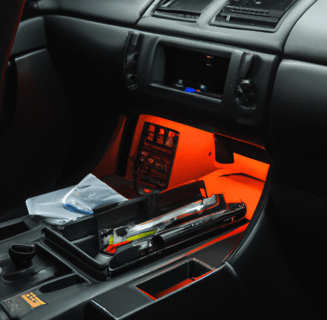
“Concealed” under California law does not require complete invisibility. The firearm must be substantially concealed — meaning ordinarily obscured from view to a person in the area where the firearm is being carried. A handgun tucked into a waistband under a shirt is substantially concealed. A handgun visible in a holster on a belt outside the shirt generally is not. A firearm in a glove box, under a seat, or in a closed center console of a vehicle is substantially concealed for § 25400(a)(1) purposes.
The Elements the Prosecution Must Prove
CALCRIM 2520 (for person) and CALCRIM 2521 (for vehicle) set out three elements the prosecution must prove beyond a reasonable doubt:
- The defendant carried on his or her person, or within a vehicle under control or direction, a firearm capable of being concealed on the person.
- The defendant knew of the presence of the firearm.
- The firearm was substantially concealed.
The required mental state is knowledge of the firearm’s presence, not knowledge that the firearm was concealed. This distinction matters in shared-vehicle, borrowed-car, and shared-residence cases where the defense theory is that the defendant did not know a firearm was in the vehicle at all. Concealment itself is an objective fact for the jury to find; the defendant’s awareness of that concealment is not a separate element under California pattern instructions.
The Seven-Tier Punishment Framework Under PC § 25400(c)
This is the section that determines whether a defendant faces 90 days in county jail or three years in state prison. PC § 25400(c) defines seven punishment tiers based on the defendant’s status and the firearm’s status at the time of the offense.
Five mandatory-felony triggers. These five subdivisions require the offense to be charged and punished as a felony under PC § 1170(h) — 16 months, two years, or three years — with no wobbler discretion:
- PC § 25400(c)(1): the defendant has a prior felony conviction, or any prior conviction under Part 6 of the Penal Code (firearm offenses generally).
- PC § 25400(c)(2): the firearm is stolen and the defendant knew, or had reasonable cause to believe, it was stolen.
- PC § 25400(c)(3): the defendant is an active participant in a criminal street gang under PC § 186.22(a). Following AB 333 (2021), the gang participation predicate requires the prosecution to prove the gang’s pattern of criminal activity in more rigorous terms than under the prior framework.
- PC § 25400(c)(4): the defendant is in a class of persons prohibited from possessing firearms under PC § 29800 (felon-in-possession), PC § 29900 (juvenile adjudication for violent offense), or Welfare and Institutions Code §§ 8100 or 8103 (mental-health-based prohibitions).
- PC § 25400(c)(5): the defendant has a prior conviction for a crime against a person or property, or for a narcotics or dangerous-drug violation.
One wobbler trigger. PC § 25400(c)(6) is the subdivision the District Attorney most often charges in ordinary cases. It applies when both the firearm is loaded (or unexpended ammunition is in the defendant’s immediate possession or readily accessible) and the defendant is not the registered owner of the firearm as listed with the California Department of Justice under PC § 11106. This subdivision is a wobbler under PC § 17(b): up to one year in county jail as a misdemeanor, or 16 months, two years, or three years under PC § 1170(h) as a felony.
One residual misdemeanor. PC § 25400(c)(7) is the catchall for cases that do not fall within (c)(1) through (c)(6) — meaning unloaded, registered to the defendant, no disqualifying prior, no stolen firearm, no gang participation. Maximum exposure is one year in county jail, a $1,000 fine, or both.
For most lawful gun owners who are charged because they had a registered handgun in a glove box during a traffic stop and lacked a valid CCW, the case starts as a § 25400(c)(7) misdemeanor — unless any one of (c)(1) through (c)(6) is also true. A single intersecting fact can move the case from a 90-day plea posture to a three-year felony posture. This is why charging discretion is the single most important decision in any § 25400 case, and why an attorney’s pre-filing engagement with the DA’s Southwest Office can change the entire trajectory.
Statutory Exemptions That Defeat the Charge Entirely
PC § 25400 does not stand alone. Several statutory exemptions across the Penal Code apply, and any one of them defeats the charge if proven.
Concealed-carry weapon permits under PC §§ 26150-26225. A valid California CCW permit issued by the sheriff of the county of residence or by a chief of police of a municipality of residence authorizes the holder to carry a concealed firearm subject to the permit’s terms. Following SB 2 and post-Bruen reform (discussed below), CCW availability in California has changed substantially. A CCW that was valid at the time of the alleged offense is a complete defense to PC § 25400.
Transportation exemption under PC § 25610. Persons 18 or older who can lawfully possess a firearm are not in violation of § 25400 when transporting a handgun if the firearm is unloaded and in a locked container under PC § 16850. The trunk of a motor vehicle qualifies as a locked container. Both elements — unloaded and locked container — are required; either one alone is insufficient.
Place-of-business and residence exemption under PC § 25605. A person may carry a concealed firearm within his or her place of residence, place of business, or private property without violating § 25400.
Peace officer and military exemptions. Active and retired peace officers under PC § 25450 et seq., military personnel acting within the scope of duty, and certain federal officers are exempt.
PC § 25600 grave-emergency exception. This is narrow. A person may carry a concealed firearm without a permit when actually facing a “grave, immediate, and reasonable danger” to person or property that cannot be avoided by other means. The exception applies to the period of immediate danger only and does not authorize ongoing carry “for protection” in the abstract.
The Post-Bruen CCW Landscape and SB 2 Sensitive-Places Framework
The U.S. Supreme Court’s June 2022 decision in NYSRPA v. Bruen eliminated discretionary “good cause” or “proper cause” requirements in CCW permitting schemes nationally, holding that the Second Amendment’s text and historical tradition govern firearm regulation. California’s response was SB 2 (Sept. 2023, effective Jan. 1, 2024), which restructured PC §§ 26150-26225 to remove the “good cause” requirement and replaced it with objective eligibility criteria.
SB 2 simultaneously expanded the “sensitive places” framework under PC § 26230 — places where even a valid CCW holder may not carry concealed. The original SB 2 list included 26 categories (schools, government buildings, healthcare facilities, transit, public assembly, parks, places of worship, places that sell alcohol, and others). Ongoing federal litigation has modified enforcement of several categories, and the framework continues to evolve through 2025 and 2026.
For a § 25400 defendant, the practical implications of SB 2 are twofold:
- The defendant’s CCW status as of the alleged offense date controls — a permit obtained after the date does not retroactively cure the conduct, but a permit valid as of the date is a complete defense.
- A CCW holder charged with § 25400 in a sensitive place under PC § 26230 may face a different enforcement theory than a defendant carrying without any permit at all.
Anyone arrested for § 25400 who has applied for or held a CCW within the past three years should preserve all documentation immediately.
Federal Firearm Prohibition Under 18 U.S.C. § 922(g)(1)
A felony § 25400 conviction triggers federal lifetime firearm prohibition under 18 U.S.C. § 922(g)(1), which makes it unlawful for any person convicted of a crime punishable by more than one year to possess any firearm or ammunition. This is independent of California’s PC § 29800 lifetime prohibition and survives California expungement under PC § 1203.4. A § 1203.4 dismissal in California state court does not restore federal firearm rights.
A misdemeanor § 25400 conviction does not trigger § 922(g)(1) but does trigger California’s 10-year firearm prohibition under PC § 29805 for enumerated misdemeanor offenses. PC § 25400 misdemeanor convictions fall within § 29805’s prohibition scheme.
For lawful gun owners — collectors, sport shooters, hunters, ranch operators — these collateral consequences are often more significant than the underlying sentence. A defendant offered a misdemeanor plea that resolves the criminal case in three months has nonetheless lost firearm rights in California for a decade. A felony plea closes federal firearm rights for life. This is why charging-tier negotiation and PC § 17(b) wobbler reduction strategy are central to § 25400 defense — see the firm’s firearm offenses practice area for the broader firearm-defense framework and the PC § 246.3 negligent discharge cornerstone for the companion analysis of irresponsible-discharge cases.
Immigration Consequences for Noncitizen Defendants
PC § 25400 is a “firearm offense” within the meaning of INA § 237(a)(2)(C). Any noncitizen — including lawful permanent residents and visa holders — convicted of any law relating to the purchase, sale, possession, carrying, transporting, or use of any firearm is deportable. This deportability ground applies regardless of whether the conviction is felony or misdemeanor.
INA § 212(a)(2) also creates inadmissibility issues for firearm convictions in adjustment-of-status, naturalization, and reentry contexts. Padilla v. Kentucky (2010) requires defense counsel to advise noncitizen defendants of these consequences before any plea. A § 25400 disposition that resolves the state case in 30 days can trigger removal proceedings that take years and end in permanent banishment. For Southwest Riverside County’s substantial immigrant population, an early conversation with counsel before plea negotiations begin is essential.
PC § 25400 Is Not a Strike — and Why That Matters
PC § 25400 is not classified as a serious felony under PC § 1192.7(c) and not a violent felony under PC § 667.5(c). It is not strike-eligible under California’s Three Strikes law in itself. This contrasts with several adjacent firearm offenses — PC § 246 (shooting at an inhabited dwelling) is a serious felony under PC § 1192.7(c)(33); PC § 245(a)(2) (assault with a firearm) is a serious felony under PC § 1192.7(c)(31); robbery committed while armed is doubly aggravated.
However, the absence of strike status does not mean the felony exposure is light. A § 25400 felony under (c)(1) through (c)(5) still carries up to three years under PC § 1170(h), still triggers federal § 922(g)(1) lifetime prohibition, and still creates immigration deportability. The strike-status point matters primarily for defendants with prior strikes, for whom a § 25400 felony does not itself constitute a third strike, and for plea-negotiation positioning where a non-strike resolution is the goal in adjacent firearm-charge cases.
Common Defenses to PC § 25400 Charges
Lack of knowledge. When the firearm was found in a borrowed vehicle, a shared-residence common area, a backpack passed between persons, or any setting where the defense theory is that the defendant did not know the firearm was present, the prosecution’s burden on element (2) — knowledge of presence — becomes the central issue. Documentary evidence (vehicle ownership history, residence records, communications) often determines this defense.
Statutory exemption. Any of the exemptions discussed above — CCW, transportation under § 25610, residence under § 25605, peace officer status, or PC § 25600 grave emergency — defeats the charge entirely if proven.
Fourth Amendment suppression. Many § 25400 cases originate in traffic stops, consensual encounters, or vehicle searches where the stop’s lawfulness or the search’s scope is challengeable. A PC § 1538.5 motion to suppress, when granted, eliminates the firearm as evidence. Without the firearm, the prosecution has no case. Terry stop scope, automobile exception limits, inventory-search compliance, and consent-validity arguments are routine in § 25400 litigation.
No substantial concealment. When the firearm was visible — in a holster outside clothing, on a dashboard, on a seat in plain view — the concealment element fails. This is a less common defense in vehicle cases but central to person-carry cases involving outside-the-waistband holsters and similar visible-carry scenarios.
Charging-tier negotiation. Even when the elements are met, the defense often centers on which subdivision of § 25400(c) controls. Negotiating from a charged (c)(6) wobbler down to a (c)(7) misdemeanor, or from a charged (c)(2) stolen-firearm felony down to a (c)(6) wobbler where the “knew or reasonably should have known” element is contested, can change the case’s entire trajectory. PC § 17(b) reduction motions on wobbler convictions remain available post-plea in (c)(6) cases.
For defendants facing § 25400 alongside other charges — assault with a firearm under PC § 245(a)(2), criminal threats under PC § 422 (see the criminal threats cornerstone), or any felony with PC § 12022.5 / PC § 12022.53 firearm enhancements — the § 25400 charge is often the negotiable component. Resolving § 25400 favorably can shift the global plea posture on the more serious counts.
Why a Murrieta Concealed Firearm Attorney Matters Early in a PC § 25400 Case
A PC § 25400 case in Murrieta, Temecula, or Menifee is decided in three windows that close fast: the charging-tier window before the DA’s Southwest Office files, the suppression window before preliminary hearing on felony filings, and the disposition window before any plea is entered.
In the charging window, the DA chooses among § 25400(c)(1) through (c)(7). The difference between a mandatory felony under (c)(1)-(c)(5) and a misdemeanor under (c)(7) is often a single intersecting fact: a prior conviction that the prosecution may not have fully verified, a stolen-firearm allegation that depends on what the defendant knew, an alleged gang-participation predicate that AB 333 has made harder to prove. Pre-filing engagement with the assigned deputy DA — presenting documentary evidence of registration, CCW history, the absence of prior convictions, or the lack of gang participation — can shift the filing decision before charges are written.
In the suppression window, the case rises or falls on the stop, the search, and the seizure of the firearm. PC § 1538.5 litigation must be prepared from the police report, body camera footage, dash camera footage, and the officer’s testimony at preliminary hearing. A suppression win at this stage ends the case. A suppression loss reframes plea posture entirely.
In the disposition window, the federal § 922(g) and immigration consequences become the actual stakes. A felony plea closes federal firearm rights for life and creates deportability for any noncitizen. A misdemeanor plea preserves federal rights but triggers PC § 29805’s 10-year California prohibition. A PC § 17(b) reduction on a (c)(6) wobbler felony, granted at sentencing or after completion of probation, can restore California firearm rights and avoid federal § 922(g)(1) — but the request must be properly framed and the record properly developed.
Anyone arrested under PC § 25400 in Southwest Riverside County — Murrieta, Temecula, Menifee, Lake Elsinore, Wildomar, Winchester, Canyon Lake, or French Valley — should preserve every document related to firearm ownership, CCW history, the vehicle or residence where the firearm was found, and the circumstances of the stop. Call before the arraignment if possible. The Law Office of Nic Cocis has handled firearm offenses at the Southwest Justice Center for over 25 years. Call (951) 400-4357 to discuss your case directly with Nic Cocis, or read more about the firm’s defense approach.