The short answer is yes — adults over 21 who are not on DUI probation can refuse field sobriety tests at a California DUI stop without committing a crime and without triggering an automatic license suspension. The longer answer matters more, because California law treats three different categories of DUI testing under three different rule sets, and confusing them is one of the most common reasons drivers make decisions at a traffic stop that hurt their defense for months afterward. This page explains how the Vehicle Code distinguishes between voluntary roadside tests, mandatory preliminary screening for certain drivers, and the post-arrest chemical test that California’s implied-consent law makes compulsory for everyone. The Law Office of Nic Cocis represents drivers facing DUI charges across Murrieta, Temecula, Menifee, Lake Elsinore, Wildomar, Winchester, Canyon Lake, and French Valley, with most local DUI matters proceeding through the Southwest Justice Center in Murrieta.
The Three Categories of DUI Testing — and Why the Rules Differ
California’s DUI testing framework splits roadside encounters into three categories with materially different rules. Knowing which is which is the foundation for every decision a driver makes during a stop.
Field Sobriety Tests (FSTs) are physical and cognitive coordination exercises that an officer asks the driver to perform at the roadside — the Horizontal Gaze Nystagmus eye test, the Walk-and-Turn, and the One-Leg Stand are the three standardized tests developed by the National Highway Traffic Safety Administration. Officers sometimes add non-standardized tests such as the Romberg balance test or finger-to-nose. FSTs are voluntary for adults 21 and older not on DUI probation. There is no statutory penalty for refusing.
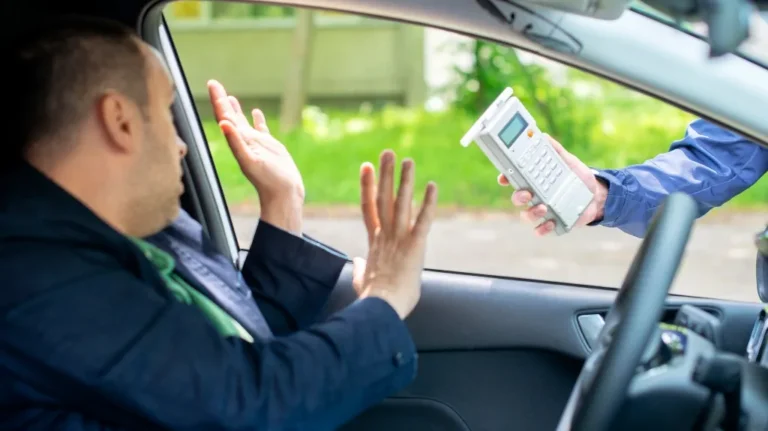
Preliminary Alcohol Screening (PAS) breath test is a handheld breathalyzer used at the roadside before any arrest. For adults 21 and older not on DUI probation, the PAS is voluntary under Vehicle Code § 23612(i). For two specific categories of drivers, however, the PAS is mandatory: drivers under 21 must submit under California’s zero-tolerance law (Vehicle Code § 23136), and drivers currently on probation for a prior DUI must submit as a condition of their probation. Refusal of a mandatory PAS carries the same consequences as refusal of a post-arrest chemical test — a one-year license suspension under the under-21 rules, and probation-violation consequences for DUI probationers.
Post-arrest chemical test is the breath or blood test administered after a driver has been lawfully arrested for DUI. This is the category governed by California’s implied-consent law at Vehicle Code § 23612, and it is mandatory for every driver, regardless of age or probation status. Refusing the post-arrest chemical test triggers automatic license suspension, can be admitted at trial as evidence of consciousness of guilt, and significantly worsens the sentencing exposure if the driver is ultimately convicted of DUI.
The three categories look similar at the roadside — a series of requests from a uniformed officer for the driver to do something — but the consequences of refusing each one are structurally different. The rest of this page walks through each category in turn.
Field Sobriety Tests — Voluntary, Often Worth Refusing
The three standardized FSTs were developed for officers to use as evidence of impairment when establishing probable cause for arrest. Officer training materials describe specific scoring criteria — how many “clues” of impairment the officer observes during each test — and the officer’s testimony about FST performance is one of the main pieces of evidence that builds the prosecution’s case at trial.
FST performance, however, is affected by factors that have nothing to do with impairment. Medical conditions — back injuries, leg injuries, vertigo, neuropathy, prior head trauma — can produce performance that mimics impairment. Age over 65 affects performance on balance-dependent tests. Weight (above approximately 50 pounds over ideal) affects the Walk-and-Turn and One-Leg Stand. Footwear — heels above 2 inches, flip-flops, dress shoes on wet pavement — produces unreliable results, which is why officer training instructs that drivers be allowed to remove unsuitable footwear (an instruction frequently ignored). The slope and surface of the roadside, the lighting, traffic noise, the proximity of passing vehicles, the temperature, and the driver’s anxiety level under arrest conditions all affect the test results.
For a driver who has not been drinking, performing FSTs is sometimes a way to demonstrate sobriety. For a driver who has consumed alcohol — even if not enough to be over the legal limit — performing FSTs gives the officer evidence that builds the probable-cause foundation for arrest and the prosecution’s case at trial. In practical terms, refusing FSTs deprives the prosecution of FST evidence; refusing does not legally prevent arrest if the officer has other indicators of impairment, but it limits the prosecution’s affirmative case.
Refusal of FSTs is not itself a crime. California courts have addressed the admissibility of FST refusal as evidence of “consciousness of guilt” in different ways depending on the facts of the case, and the question is more nuanced than the broader rule for post-arrest chemical test refusal. Defense counsel can frequently challenge the introduction of FST refusal evidence at trial, particularly where the officer failed to clearly distinguish between voluntary FSTs and the mandatory post-arrest chemical test. This is one reason the legal landscape on FST refusal at trial is meaningfully different from the rigid rules that govern chemical test refusal.
The Preliminary Alcohol Screening (PAS) Breath Test
The PAS breath test uses a handheld breathalyzer device — different from the larger evidentiary breath machines used after arrest — to give the officer a roadside estimate of the driver’s blood alcohol content. For adults 21 and older not on DUI probation, the PAS is voluntary under VC § 23612(i), and the officer is required to advise the driver of that fact.
PAS results are subject to substantial reliability challenges. The handheld devices are sensitive to mouth alcohol, recent ingestion of certain foods or medications, residual breath alcohol from oral hygiene products containing alcohol, GERD or acid reflux conditions producing rising stomach contents, and the device’s calibration and maintenance history. PAS evidence is admissible at trial, but its reliability is more contested than the larger evidentiary breath devices used after arrest.
Refusing a DUI Chemical Test in California
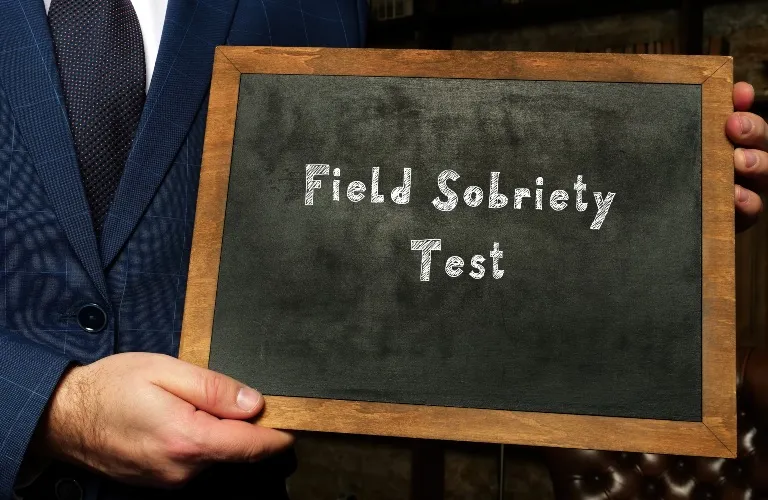
It is also important to understand the difference between field sobriety tests and chemical testing. Once a driver is lawfully arrested for DUI in California, the state’s implied consent laws generally require the driver to submit to an official chemical test, such as a breath or blood test. Chemical tests are much more reliable to determine intoxication. Refusing a post-arrest chemical test can result in serious consequences, including an automatic 1-year suspension of your California’s driver’s license, enhanced penalties, and additional complications in court.
Contact The Law Office of Nic Cocis For Experienced DUI Defense
If you or a loved one has been arrested for DUI, contact The Law Office of Nic Cocis for experienced and dedicated DUI defense representation in Riverside County and the surrounding areas. Our passionate legal team understands the serious nature of DUI charges and is committed to protecting clients’ rights and driving privileges. Prompt legal guidance can make a substantial difference in the outcome of your case, so do not wait to discuss your options with a qualified DUI defense attorney. Contact us today to schedule a consultation.