
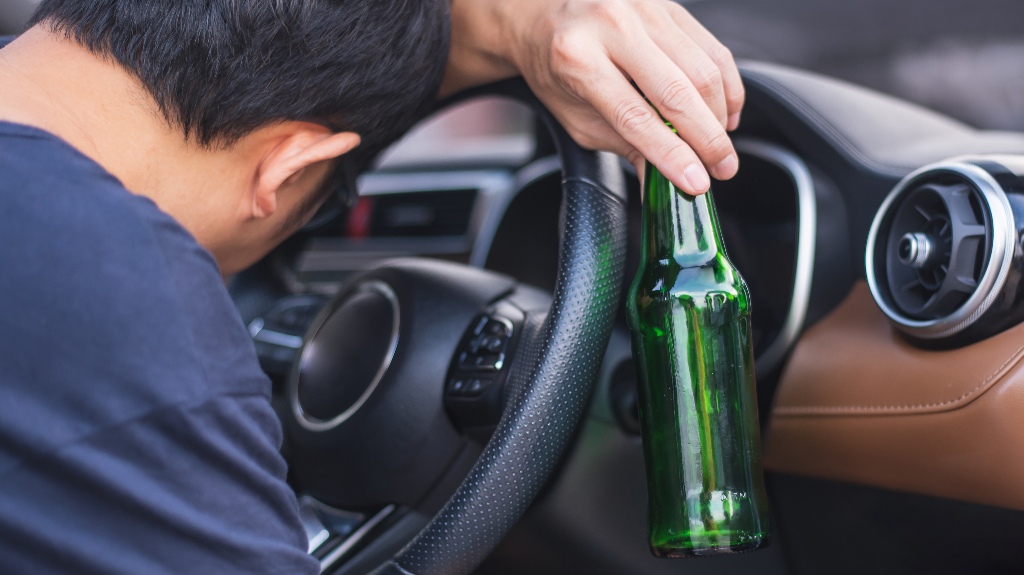
A parked car DUI in California is one of the most misunderstood scenarios in criminal defense law — both by the public and by other jurisdictions’ frameworks that get cited as if they applied here. The short answer is that California is one of only a handful of states that does not allow a DUI conviction based on “actual physical control” of a parked vehicle. Under the California Supreme Court’s decision in Mercer v. Department of Motor Vehicles, the prosecution must prove “volitional movement of a vehicle” — that the vehicle actually moved, even slightly, while the defendant was under the influence. Police can still arrest you in a parked car, and the DMV can still try to suspend your license, but the standard for what the prosecution has to prove at trial is meaningfully higher than in physical-control states. If you have been arrested for a parked car DUI in Murrieta, Temecula, Menifee, Lake Elsinore, Wildomar, Winchester, Canyon Lake, or French Valley, your case will be filed at the Southwest Justice Center in Murrieta — and the analysis of what the prosecution can actually prove should start before the first court appearance.
Yes, You Can Be Arrested. The Real Question Is Whether You Can Be Convicted.
Two separate legal standards govern a parked car DUI in Murrieta and across California, and conflating them is the most common mistake made in published summaries of the law.
The arrest standard is “reasonable cause to believe driving occurred.” Under Penal Code § 836 and California arrest law, an officer can arrest based on probable cause that a DUI took place. A driver found asleep in a parked car with the keys in the ignition, the engine warm, alcohol on the breath, and a vehicle position consistent with recent driving meets that standard — even if the officer never sees the car move. Arrests in parked cars happen routinely in Southwest Riverside County, and the arrest itself is generally lawful when the surrounding circumstances support a reasonable inference of recent driving.
The conviction standard is “proof beyond a reasonable doubt that the vehicle was driven.” This is where California law diverges sharply from most other states. The prosecution must prove every element of the offense, and one of those elements — under Mercer v. Department of Motor Vehicles — is volitional movement of the vehicle while the defendant was under the influence. Arrest, even a lawful one, does not establish that element. The prosecution needs additional proof at trial.
The gap between these two standards is where “no driving” defenses live, and it is wider than most people realize.
California’s Mercer Rule — Why “Physical Control” Doesn’t Apply Here
In Mercer v. Department of Motor Vehicles (1991), the California Supreme Court directly confronted the question of whether sitting in a parked car with the engine running constituted “driving” under VC § 23152. The lower court had ruled that “actual physical control” of the vehicle was enough — that an intoxicated person plainly about to “resume travel along the public roads” was driving in the statutory sense.
The Supreme Court reversed. Reading the plain meaning of the statutory term “drive,” the use of related terms in the California Vehicle Code, and the interpretation of “drive” in courts across the country, the Mercer court concluded that VC § 23152 requires proof of volitional movement of the vehicle. The court explicitly distinguished between the term “driver” (defined more broadly in VC § 305) and the verb “drive” (which requires actual operation). Sitting in a parked car with the engine on, the headlights on, and the wipers running was not enough.
The rule has been consistently applied in the decades since. Even slight movement counts — releasing the parking brake to let the car roll, moving the vehicle a few inches, or steering while a passenger works the gas all qualify as “driving.” But the absence of any movement at all, when supported by the evidence, defeats the driving element entirely.
This is one of several areas where California DUI law sets a higher bar for prosecutors than most other states. The full framework for challenging DUI evidence — corpus delicti, chain of custody, Title 17 compliance, and the Mercer rule together — is covered in detail in our companion DUI evidence post.
How the Prosecution Tries to Prove Driving in a Parked Car Case
Because direct evidence of driving is rare in parked car cases (no officer saw the car move), the prosecution relies on circumstantial evidence. The typical evidence the District Attorney’s office tries to introduce in a Southwest Riverside County parked car DUI case includes:
- The condition of the engine and vehicle. A warm engine, a recently driven hot exhaust system, condensation patterns, or a running engine all support an inference of recent driving.
- The vehicle’s position. A car parked askew, partially blocking traffic, in a lane of travel, or in a place inconsistent with normal parking suggests the driver made it that way recently. A car neatly parked in a marked parking space cuts the other direction.
- Distance from the place of drinking. A car parked away from any bar, restaurant, or residence where the defendant was drinking suggests the defendant drove there. A car parked next to a bar with the defendant slumped in the seat is more ambiguous.
- The defendant’s own statements. Statements to the arresting officer about how the defendant got to the location, where they were coming from, or whether they had been driving are powerful evidence — and one of the most common reasons clients lose otherwise winnable Mercer defenses. The right of silence under the Fifth Amendment exists precisely because of how heavily these statements weigh against the defense at trial.
- Where the keys are. Keys in the ignition, keys in the defendant’s hand, or keys in the pocket all support different inferences. Keys in the back seat or in a passenger’s possession may cut the other way.
- Time of last known sober conduct. If there is evidence the defendant was at a known location consuming alcohol, the question becomes how they got from that location to the parked car. The prosecution will try to fill that gap with inference.
- Eyewitness testimony. Other drivers, passengers, or bystanders who saw the vehicle in motion can establish driving directly. The corresponding eyewitness identification issues are familiar territory.
Scenarios — Who Gets Convicted and Who Wins on Mercer
Four common parked car DUI scenarios in Southwest Riverside County illustrate how Mercer plays out in practice.
Scenario 1: Drove home drunk, pulled over to sleep it off, found by officer. The driver actually drove while intoxicated, then parked. The circumstantial evidence (location, vehicle position, warm engine, defendant’s statements) typically supports a conviction. Mercer doesn’t help here because the prosecution can prove driving occurred — the defendant just happened to be asleep when found.
Scenario 2: Drank at home, walked to car to retrieve an item, arrested in or near the car. No driving occurred at all. Mercer is a complete defense. The case should not survive a motion to dismiss on corpus delicti grounds if the prosecution cannot produce evidence of movement.
Scenario 3: Drove sober, parked, then drank in the car, arrested without moving the car again. The defendant was not under the influence when driving and was not driving when under the influence. Mercer plus the temporal element of the offense make this a strong defense. The prosecution must prove both that driving occurred AND that the defendant was impaired at the time of driving. Drinking after the driving ended is not a crime under VC § 23152.
Scenario 4: Engine started, but the vehicle never actually moved. This is the classic Mercer fact pattern. The defendant has a Mercer defense to the completed DUI charge, but may face an alternative charge — attempted DUI under Penal Code § 21(a) — for taking a direct but ineffectual act toward driving while impaired.
Alternative Charges When Mercer Defeats the DUI
When the volitional-movement element fails, the prosecution is not entirely without options.
Attempted DUI under PC § 21(a). California recognizes the crime of attempt — the specific intent to commit a crime combined with a direct but ineffectual act toward committing it. Sitting in the driver’s seat with the keys in the ignition and the engine running, while impaired, may support an attempted DUI charge even when actual driving cannot be proved. Attempted DUI carries roughly half the maximum penalties of a completed DUI, does not trigger an automatic DMV license suspension, and does not count as a “prior” for enhancement purposes in future DUI cases. For a defendant in a strong Mercer position, negotiating to attempted DUI can be a substantial win.
Public intoxication under PC § 647(f). When the facts support intoxication in a public place but not driving, public intoxication is sometimes available as a plea-bargained reduction. It is a misdemeanor but carries no IID requirement, no DUI program, no driving consequences, and no DUI prior status.
Reckless driving under VC § 23103. “Dry reckless” — reckless driving without alcohol allegation — is also sometimes negotiated as a reduction. It does not count as a DUI prior.
Wet reckless under VC § 23103.5. “Wet reckless” — reckless driving with alcohol involved — does count as a prior for future DUI cases but carries lighter immediate penalties than a completed DUI.
The DMV Hearing — Mercer Applies There Too
The 10-day DMV hearing window after a DUI arrest is one of the most important deadlines in any case, and it applies in parked car cases the same as in any other DUI. Under Mercer, the DMV must also prove volitional movement of the vehicle by a preponderance of the evidence to sustain an Administrative Per Se suspension. Hearing officers sometimes try to apply a “physical control” standard at the DMV level — this should be challenged on Mercer grounds directly. The DMV’s own internal guidance acknowledges that insufficient evidence of driving requires a set-aside of the suspension.
The DMV hearing process and the broader implied consent framework — including refusal consequences, chemical testing rules, and the parallel DMV/criminal court tracks — is covered in detail in our companion implied consent post.
Defending a Parked Car DUI in Murrieta, Menifee and Temecula
The defense framework for a parked car case typically proceeds along three parallel tracks.
Pretrial motions. A motion to suppress on probable-cause grounds — challenging the arrest itself for lack of reasonable cause to believe driving occurred — can knock out key evidence early. A corpus delicti motion can challenge whether the prosecution has independent evidence of the driving element apart from the defendant’s own statements.
The DMV hearing. Filed within 10 calendar days of the arrest. Mercer applies. A set-aside of the APS suspension preserves the defendant’s license while the criminal case proceeds and often signals weakness in the prosecution’s driving evidence.
Trial preparation. If the case proceeds to trial, the defense develops the Mercer challenge as part of a broader attack on the prosecution’s proof. The driving element is litigated alongside the impairment element, the BAC evidence, and the corpus delicti requirement.
The strength of any individual defense depends on the specific facts — the position of the vehicle, the defendant’s statements, the time and location of arrest, and the available circumstantial evidence. But the Mercer rule means that California parked car DUI cases are substantially more defensible than the same fact pattern would be in Arizona, Florida, or most other states.
Talk to a Southwest Riverside County DUI Defense Attorney
A parked car DUI in California is not the same case as a moving DUI — and it is not the same case as a parked car DUI would be in a “physical control” state. The Mercer rule gives the defense a structural advantage that disappears if the case is not handled by counsel familiar with the doctrine. The Law Office of Nic Cocis represents DUI clients across Southwest Riverside County — Murrieta, Temecula, Menifee, Lake Elsinore, Wildomar, Winchester, Canyon Lake, and French Valley — and appears at the Southwest Justice Center for arraignments, DMV hearings, motions, and trials. With over 25 years of trial experience, attorney Nic Cocis defends parked car DUI cases at every stage from the initial arrest through verdict.
For a free, confidential consultation about a parked car DUI charge in Southwest Riverside County, call (951) 400-4357.
