
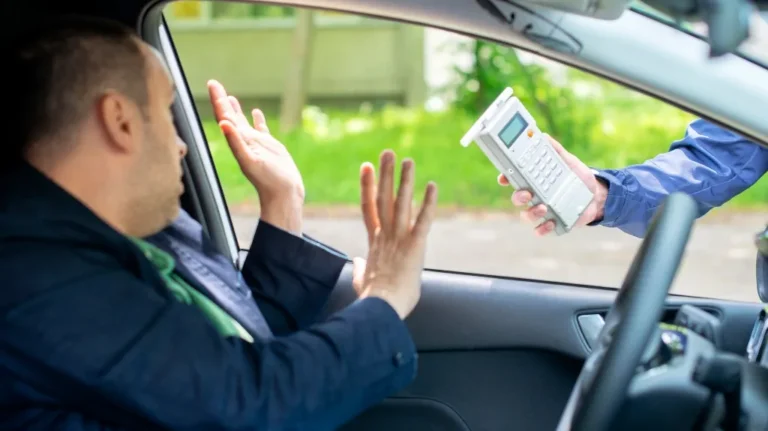
A DUI causing injury first offense in California is charged under Vehicle Code § 23153, and even with no criminal record it can be filed as a felony carrying 16 months, two years, or three years in state prison — or as a misdemeanor carrying up to a year in county jail. Which version you face, and what the sentence actually looks like, turns on decisions the Riverside County District Attorney makes in the first weeks after the collision. Our office defends these cases at the Southwest Justice Center in Murrieta for drivers from Murrieta, Temecula, Menifee, Lake Elsinore, Wildomar, Winchester, Canyon Lake, and French Valley. This page walks through what a first-offense § 23153 conviction actually costs — jail, probation, license, ignition interlock, fines, and your record going forward — and where that exposure can be reduced. For the full statute, the enhancements, and the defenses, see our VC § 23153 felony DUI causing injury guide; this page is about the first-offender’s sentence.
Is a First-Offense DUI Causing Injury a Felony or a Misdemeanor?
It can be either. VC § 23153 is what California calls a “wobbler” — an offense the prosecutor can file as a misdemeanor or a felony based on the facts — and “first offense” does not mean “misdemeanor.” A clean record is one factor the District Attorney weighs; the severity of the injury is usually the bigger one.
What separates § 23153 from a regular DUI under § 23152 is two additional things the prosecution must prove: that you committed some unlawful act or neglected a duty while driving (speeding, running a light, an unsafe lane change — something beyond the drinking itself), and that this conduct caused bodily injury to someone other than you. If the collision was the other driver’s fault, or no one but you was hurt, § 23153 does not fit and the case is a misdemeanor § 23152 at most. Those elements, and how they are attacked, are covered in the § 23153 guide linked above.
What Counts as a “First Offense” Under VC 23153?
For sentencing purposes, “first offense” means no prior DUI-type conviction within the 10 years before the new offense date. A prior § 23152 DUI, a prior § 23153, a “wet reckless” plea under § 23103.5, or an equivalent conviction from another state all count. So a driver who has never had a DUI accident but picked up a regular DUI eight years ago is not a first offender for § 23153 purposes — the case is sentenced as a second offense, with 120 days to one year in jail on the misdemeanor version and a three-year license revocation rather than a one-year suspension.
An expunged prior still counts. A PC § 1203.4 dismissal cleans up the public record, but the Vehicle Code expressly treats a dismissed DUI as a prior for the 10-year lookback. If you have any prior in that window, the picture on this page shifts — see our pages on third and fourth DUIs within ten years and the § 23153 guide’s second- and third-offense tiers.
First-Offense Penalties If the Case Is Filed as a Misdemeanor
A first § 23153 filed as a misdemeanor is sentenced under VC § 23554. The statute sets two tracks:
- Without probation: 90 days to one year in county jail and a base fine of $390 to $1,000.
- With probation (the usual outcome on a first offense), VC § 23556 requires: a jail term of at least 5 days and up to one year as a condition of probation, the same $390–$1,000 base fine, and completion of a licensed DUI program — three months if your blood alcohol was under 0.20%, nine months if it was 0.20% or higher.
The “base fine” is not what you will pay. California’s penalty assessments and surcharges are added on top, and a $390 base fine routinely becomes more than $2,000 once they are applied. Victim restitution under PC § 1202.4 is separate and mandatory — the injured person’s medical bills, lost wages, and vehicle damage not covered by insurance are ordered as part of the sentence, and the court does not waive it.
On top of the court’s sentence, a first § 23153 conviction triggers a one-year driver’s license suspension and a 12-month ignition interlock requirement (both covered below). If a child under 14 was in your car, expect a separate PC § 273a child endangerment count rather than a sentencing add-on; that charge carries its own exposure.
In Riverside County, probation on a misdemeanor § 23153 is normally summary probation — you report to the court, not a probation officer — but the conditions are the full DUI set described in the probation section below.
First-Offense Penalties If the Case Is Filed as a Felony
A first § 23153 filed as a felony carries 16 months, two years, or three years in state prison under § 23554 — not county jail. DUI-with-injury felonies are not realignment offenses, so a prison sentence means actual state prison, and the court cannot absolve you of the minimum confinement or fine the statute sets.
Probation is still available on a first-offense felony. When the court grants it, the felony sentence is suspended and the § 23556 conditions apply instead: 5 days to one year in county jail, the base fine, the DUI program, and three to five years of formal probation with a probation officer. For most first offenders charged with a felony, that probationary disposition — or a reduction to the misdemeanor version — is the realistic goal.
What makes a felony first offense dangerous is not the base term. It is the enhancements, which attach to the injury rather than to your record:
- Great bodily injury (PC § 12022.7) — a “significant or substantial” physical injury adds three years consecutive to the sentence, and the combination of a felony § 23153 plus a great-bodily-injury finding is classified as a serious felony, which means a strike on your record for the rest of your life.
- More than one victim (VC § 23558) — one additional year for each additional injured person, up to three extra years.
A first-time driver with a fracture victim and a second injured passenger can therefore be looking at three years base plus three for great bodily injury plus one for the extra victim — seven years — on a first offense. The § 23153 guide walks through that math and how the great-bodily-injury allegation is contested; here, the point is simply that “first offense” buys you nothing against these enhancements. Removing them is where defense work on a felony first offense concentrates.
What Makes the Riverside County DA File a First Offense as a Felony?
The charging decision is made in the District Attorney’s Southwest office, which reviews the collision report from CHP, Murrieta Police, Temecula Police, or the Riverside County Sheriff’s Department, the chemical test results, and the injured person’s medical records before filing. From the cases we handle on the Southwest Justice Center DUI calendars, the factors that push a clean-record § 23153 toward a felony filing are predictable:
- Severity and documentation of the injury. An ER visit with release the same day reads very differently from a fracture, surgery, or an overnight admission. Medical records that support a great-bodily-injury allegation almost always produce a felony filing.
- Blood alcohol level. Under VC § 23578, a BAC of 0.15% or higher, or a refusal to submit to chemical testing, is a statutory aggravating factor the court considers at sentencing — and the DA considers at filing.
- The driving conduct. Speed on the I-15 or I-215, a red light at a major intersection, a wrong-way entry — the more serious the “unlawful act,” the more likely the felony.
- Leaving the scene. A hit-and-run allegation under VC § 20001 stacks a second felony and signals consciousness of guilt.
- Multiple vehicles or multiple victims.
- Any prior record, DUI or not. A clean record is the first offender’s strongest filing-stage argument.
You will usually learn how the case was filed from where it is arraigned. Felony § 23153 filings are arraigned in Department S-204 at the Southwest Justice Center; misdemeanor filings go to S-104. The weeks before that first court date — while the DA is waiting on blood results and medical records — are the window in which our office can put mitigation, a clean driving history, and a competing account of causation in front of the filing deputy. After the complaint is filed, moving the charge down is slower and harder.
What Happens to Your License After a First DUI Causing Injury
Two separate processes act on your license, and the first one starts before any court date.
The DMV administrative suspension. The arrest itself triggers a DMV “administrative per se” action. You have 10 days from the arrest to request a DMV hearing; if you miss that window, the suspension takes effect automatically. That hearing is the only chance to contest the license action independent of the criminal case, and it is covered in our DMV hearing guide.
The court-conviction suspension. On conviction of a first § 23153, VC § 13352 requires the DMV to suspend your license for one year. Reinstatement requires proof of financial responsibility (an SR-22 filing with your insurer) and proof that you completed the DUI program.
The ignition interlock path. A first § 23153 conviction carries a mandatory 12-month ignition interlock device (IID) under VC § 23575.3. The trade-off is that, in most alcohol-related first-offense cases, installing the IID lets you drive on a restricted license during the suspension period instead of sitting out the full year. Our license reinstatement guide covers the DMV paperwork, the SR-22, and the IID vendor requirements step by step.
Probation on a First DUI Causing Injury: What Three to Five Years Actually Means
Since 2021, most California misdemeanor probation has been capped at one year and most felony probation at two. DUI is the exception. VC § 23600 expressly overrides the general cap and requires a probation term of not less than three nor more than five years on any § 23152 or § 23153 conviction. If someone tells you a first DUI with injury means a year of probation, they are applying the wrong rule.
The mandatory conditions during that period are:
- Zero tolerance behind the wheel. Under VC § 23154, driving with a blood alcohol concentration of 0.01% or more while on DUI probation is itself a violation — one drink is enough.
- No refusal. If you are arrested for DUI again during probation, you may not refuse a chemical test; refusal is a probation violation on its own.
- No new offenses.
- Program completion. Failure to enroll in or complete the DUI program requires the court to revoke probation absent good cause.
- Payment of the fine, fees, and restitution, and compliance with the IID order.
A violation sends the case back to court, where the judge can impose the jail or prison term that was suspended when probation was granted. Early termination under PC § 1203.3 is legally possible but uncommon in DUI cases before the three-year mark.
One more thing happens at the plea that you should understand before entering it: the court gives a formal warning, on the record, that driving under the influence is dangerous to human life and that a future DUI causing death can be charged as murder. That advisement follows you permanently. The § 23153 guide explains the murder exposure it creates; what matters here is that a first-offense plea is the moment it attaches.
Can a First-Offense Felony DUI Causing Injury Be Reduced or Expunged Later?
Reduction to a misdemeanor. Because § 23153 is a wobbler, a felony conviction that results in probation rather than prison can be reduced to a misdemeanor under PC § 17(b) — at sentencing, or later after you complete probation successfully. Where the DA will not file the case as a misdemeanor outright, negotiating a plea that leaves the § 17(b) reduction available is often the most valuable term in the agreement. A felony that went to state prison cannot be reduced this way.
Expungement. After probation is completed, a first-offense § 23153 — misdemeanor or felony-reduced-to-misdemeanor — is eligible for dismissal under PC § 1203.4. Understand what that does and does not do. It allows you to answer “no conviction” on most private employment applications. It does not restore your license, shorten the IID term, erase the conviction as a 10-year DUI prior, or undo the murder advisement given at your plea. A conviction that resulted in a state prison sentence is not eligible for § 1203.4 relief at all. Our California expungement guide covers the current rules and the newer automatic-relief laws.
How a First-Offense DUI Causing Injury Case Moves Through the Southwest Justice Center
Every § 23153 case from the eight cities above is prosecuted at the Southwest Justice Center, 30755 Auld Road in Murrieta, by the Riverside County District Attorney’s Southwest office. Our office is at 25026 Las Brisas Road, a few minutes from the courthouse, and we have appeared on its DUI calendars nearly every week since the courthouse opened.
What a first offender should expect, in order:
- A delayed filing. In an injury collision, you are often released from the hospital or cited rather than booked, and the DA does not file until the blood results and medical records come back. Weeks or months with no court date is normal and is not a sign the case went away. It is the pre-filing window described above.
- Arraignment in S-104 (misdemeanor) or S-204 (felony), where the charging decision becomes visible and bail or release terms are set.
- Discovery and investigation. What we scrutinize in a first-offense § 23153: the collision report’s causation finding (was the “unlawful act” actually yours?), the chemical test (hospital blood draws without a warrant or valid consent, Title 17 compliance, rising-BAC timing), and the medical records behind any great-bodily-injury allegation. Our guide to challenging DUI evidence covers the suppression and testing issues in detail.
- Preliminary hearing (felony filings only) — the first on-the-record test of the injury and causation evidence, and a frequent point at which a felony § 23153 is reduced.
- Disposition. For most first offenders, the negotiation is about tier (felony to misdemeanor § 23153, or § 23153 to a regular § 23152 DUI), removing any enhancement allegation, preserving the § 17(b) reduction, and structuring the jail term around work and family.
- Restitution. A separate hearing if the amount is disputed; it runs alongside the injured person’s insurance claim, which our office coordinates with so that nothing said in the civil matter damages the criminal defense.
If the injured person died, the case is no longer a § 23153 matter — see our comparison of vehicular manslaughter and DUI manslaughter charges.
Frequently Asked Questions
Will I go to jail for a first-offense DUI causing injury in California? Some custody is mandatory. With probation, the minimum is 5 days in county jail and the maximum is one year; without probation, the minimum is 90 days. On a felony filing without probation, the range is 16 months to three years in state prison. In Riverside County, first-offense misdemeanor terms are frequently served through alternatives such as work release, but the court cannot waive the statutory minimum.
Is a first-offense DUI causing injury a strike? Not by itself. It becomes a strike only when it is filed as a felony and the prosecution proves a great-bodily-injury enhancement under PC § 12022.7. Keeping that enhancement off the case is the single most important goal in a felony first-offense § 23153.
How long is probation for a first DUI with injury? Three to five years, under VC § 23600. The one-year misdemeanor probation cap that applies to most other offenses does not apply to DUI.
Can a first DUI causing injury be reduced to a regular DUI? Yes, and it happens regularly when the causation or “unlawful act” evidence is weak, when the injury is minor, or through negotiation. A § 23152 plea carries no felony exposure, no great-bodily-injury strike risk, and a shorter license suspension.
Why a DUI Causing Injury First Offense Still Needs a Defense Attorney Early
The first-offender’s instinct is that a clean record will carry the case. In a § 23153 prosecution it helps at filing and at sentencing, but it does nothing against the enhancements that attach to the injury, nothing to shorten the three-to-five-year probation term the Vehicle Code requires, and nothing to stop the 10-day DMV clock. The decisions that determine whether you face a felony, a strike, and a prison term — or a misdemeanor with a reduction and an eventual expungement — are made before the complaint is filed, at the preliminary hearing, and at the plea. Each of those is a point where evidence of causation, the chemical test, and the medical characterization of the injury can be contested.
If you or a family member has been arrested for a DUI collision with injuries in Murrieta, Temecula, Menifee, Lake Elsinore, Wildomar, Winchester, Canyon Lake, or French Valley, request the DMV hearing within 10 days, preserve every photograph, document, and medical record from the incident, and talk to a defense attorney before any plea is entered. Nic Cocis has defended DUI causing injury cases at the Southwest Justice Center for more than 25 years; see our case results and our felony DUI and DUI accident with injury practice pages. Call (951) 400-4357 for a free, confidential consultation.