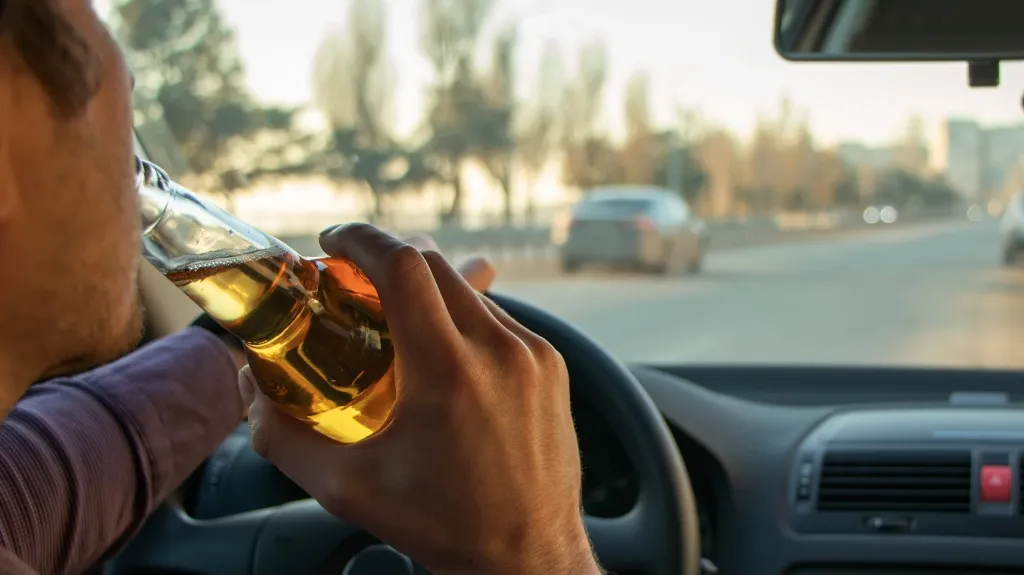

When a DUI accident hurts someone — a passenger in the car, another driver, a pedestrian, a cyclist — the case is treated under a different law than a regular DUI. California Vehicle Code § 23153 applies, and the same drunk driving that would otherwise be a misdemeanor can now be filed as a felony with state prison time on the table. Even on a first offense. The decisions that shape exposure happen in the first days and weeks after arrest. As a Murrieta felony DUI attorney handling cases at the Southwest Justice Center, Nic Cocis has defended DUI accident cases across Southwest Riverside County for over 25 years.
If you or someone in your family is facing felony DUI charges in Murrieta, Temecula, Menifee, Lake Elsinore, Wildomar, Winchester, Canyon Lake, or French Valley, this page covers what you need to know: the difference between regular DUI and DUI causing injury, the prison and jail exposure, how the severity of injuries can multiply that exposure, the murder-charge risk for anyone with a prior DUI on record, and the defenses that actually work.
When a DUI Becomes a Felony in California
A standard DUI in California is a misdemeanor — the law is Vehicle Code § 23152, and the maximum jail time on a first offense is six months. The case stays in misdemeanor court.
When the same drunk driving causes injury to anyone other than the driver, the law treats the case completely differently. The statute is Vehicle Code § 23153, and the charge is what California calls a wobbler — a charge that prosecutors can file as either a misdemeanor or a felony, depending on the facts of the case, how serious the injury was, and the driver’s prior record. When filed as a felony, state prison becomes possible even on a first offense.
The choice between misdemeanor and felony is the prosecutor’s. That decision gets made in the weeks between arrest and the first court date. Pre-filing work by a defense attorney — submitting evidence, character letters, an accident reconstruction analysis to the assigned deputy district attorney — can sometimes shift that decision toward the misdemeanor version, or away from § 23153 entirely.
What the Prosecutor Has to Prove
To convict someone under § 23153, the prosecutor has to prove all of these things beyond a reasonable doubt:
That the person was driving under the influence. Same proof as a regular DUI — either driving while impaired by alcohol or drugs, or driving with a blood alcohol level of 0.08% or higher.
That the driver committed some illegal act — separate from the DUI itself — or neglected a legal duty. This is the element most people don’t realize exists. The drunk driving alone is not enough. There has to be some other driving misconduct that caused the accident. Common examples:
- Speeding
- Running a red light or stop sign
- Unsafe lane change
- Failure to yield
- Following too closely
- Driving on the wrong side of the road
That this separate misconduct is what actually caused the injury. The legal phrase for this is “proximate cause.” In plain English: the prosecution has to show that the speeding (or the red light, or the unsafe lane change) is what caused the accident. If the accident was caused by the other driver, by road conditions, or by something the defendant could not have controlled, this element fails — and the case typically drops back to misdemeanor DUI.
That someone other than the driver was hurt. If the driver is the only one injured, § 23153 doesn’t apply, no matter how intoxicated the driver was. The case may still be a misdemeanor DUI, but it is not the felony version.
Causation is where many of these cases are won at trial. A drunk driver who was lawfully driving in their own lane and was hit by a sober driver running a red light has not committed § 23153 — even if the drunk driver’s passenger is hurt. The drunk driver’s intoxication did not cause the accident; the other driver did. This is a defense, not a technicality.
How Many Years in Jail or Prison for a Felony DUI With Injury?
The penalty depends on three things: whether the case is filed as a misdemeanor or felony, whether there are prior DUI convictions in the past 10 years, and whether any sentencing enhancements apply (covered in the next sections).
First-time felony DUI with injury (no priors within 10 years). State prison sentence of 16 months, 2 years, or 3 years. Or, if the prosecutor files as a misdemeanor, 90 days to 1 year in county jail. Probation is available even on the felony version, and when granted can replace the prison commitment with a county jail term of 30 days to 1 year as a probation condition. Base fines run from $390 to $1,000 before penalty assessments (which often multiply the fine several times over).
Second offense within 10 years. If there is a prior DUI conviction (or reckless driving with priors) within the past 10 years, the penalties go up: 120 days to 1 year county jail on the misdemeanor version, or 16 months, 2 years, or 3 years state prison on the felony version. The driver’s license is revoked for 3 years, not suspended — and the difference matters (covered in the license section below).
Third or subsequent offense within 10 years. With two or more prior DUI convictions within 10 years, the case is no longer a wobbler. It must be filed as a felony, with state prison time of 2, 3, or 4 years. License revocation is 5 years.
These are the base sentencing ranges. The enhancements covered next can add years on top.
What Happens When the Injury Is “Great Bodily Injury”
California law treats serious injuries differently from ordinary injuries. Penal Code § 12022.7 — the “great bodily injury” enhancement statute — adds consecutive prison time when the injury is significant or substantial.
Great bodily injury, often abbreviated GBI, means more than minor cuts and bruises. Conditions that have been treated as great bodily injury in DUI cases include:
- Broken bones
- Lacerations requiring stitches
- Internal injuries
- Concussions causing lasting effects
- Soft-tissue injuries requiring substantial medical treatment
- Prolonged hospital stays
The basic GBI enhancement adds 3 years consecutive to the underlying felony DUI sentence. If the GBI causes coma or paralysis, the enhancement is 5 years consecutive. If the injured person is age 70 or older, or a child under 5, separate enhancements of 5 years or 4-to-6 years apply.
In practical terms: a felony DUI with injury that includes a great bodily injury enhancement can carry up to 6 years on a first offense (3-year base felony + 3-year enhancement). Multi-vehicle accidents with multiple seriously injured people stack even higher.
Whether an injury legally counts as “great bodily injury” or “ordinary bodily injury” is often a question of fact for the jury — and it is one of the most contested issues in these cases. Defense work on this point involves reviewing the victim’s medical records, investigating the actual recovery trajectory, retaining a medical expert when warranted, and addressing any prior medical conditions that may have contributed to the severity. A successful challenge to the great bodily injury allegation removes the consecutive enhancement entirely.
What Happens When More Than One Person Was Hurt
When a single accident causes injury to more than one person, California adds a multiple-victim enhancement under Vehicle Code § 23558 — 1 additional year of consecutive prison time for each additional victim beyond the first, up to a maximum of 3 added years.
The multi-victim enhancement stacks on top of the great bodily injury enhancement. A felony DUI with three injured victims, one of whom suffered great bodily injury, can carry:
- 3-year base felony sentence
- 3-year great bodily injury enhancement (for the seriously injured victim)
- 2-year multiple-victim enhancement (for the two additional victims beyond the first)
Total: 8 years state prison. And because of the great bodily injury characterization, sentencing credits are limited to 15% under California’s violent felony credit cap — meaning the actual time served on an 8-year sentence is roughly 6.8 years before parole consideration.
These numbers escalate quickly. A multi-vehicle collision with multiple seriously injured people can produce double-digit exposure even on a first felony DUI.
Will a Felony DUI With Injury Count as a Strike?
The “strike” question is one of the most important in any California felony case. California’s Three Strikes Law adds significant additional exposure when a defendant has prior felony convictions classified as “serious” or “violent.”
A felony DUI under § 23153 by itself is not a strike. It is not classified as a serious felony or a violent felony on its own.
When a great bodily injury enhancement is added, the picture changes. The combination of a felony DUI conviction plus a great bodily injury enhancement is classified as a serious felony under Penal Code § 1192.7(c)(8) — and as a violent felony for sentencing credit purposes. That classification means:
- The conviction counts as a “strike prior” in any future felony case
- If the defendant already has a strike prior on their record, the current sentence is doubled under Penal Code § 667(e)(1)
- If the defendant has two or more strike priors, the case triggers 25-to-life under Penal Code § 667(e)(2)
For any defendant with a prior strike on their record, this is the single most consequential aspect of a felony DUI with injury case. Negotiating the great bodily injury enhancement off the case — even when other charges have to be accepted — is often strategically central.
Can a DUI Be Charged as Murder in California?
Yes, in some situations — and this is one of the most misunderstood areas of California DUI law.
Every defendant who pleads to a DUI in California receives a “Watson admonishment.” This is a formal warning, given on the record by the judge, that driving under the influence is dangerous to human life — and that if the defendant drives under the influence again and someone dies, the defendant can be charged with second-degree murder rather than vehicular manslaughter. The warning is documented in the court file. The defendant’s signature acknowledging the warning is preserved.
That warning matters years later. If the defendant gets a second DUI that causes a death, the prosecutor can point to the prior Watson warning and argue that the defendant had been told — formally, on the record — that driving drunk could kill someone. That formal awareness is what California law calls “implied malice” — knowing the conduct creates a substantial risk of death and doing it anyway. Implied malice is enough to charge second-degree murder under California law, even without intent to kill anyone.
The Watson framework matters at three points in any DUI case:
At the first DUI plea. The defendant is warned. The warning is documented.
At any later DUI involving a death. The earlier warning becomes evidence the prosecution uses to charge second-degree murder rather than vehicular manslaughter.
At any later felony DUI involving serious injury. Even without a death, the prior warning can affect charging decisions and sentence negotiation.
This is the single most important reason every DUI case — even a first-time DUI — should be defended with attention to long-term consequences. A first-time DUI plea that includes a Watson admonishment turns every future DUI arrest into a potential murder case. For comprehensive coverage of first-time DUI strategy, see the firm’s first-time DUI hub post.
When death actually does result from a DUI, the prosecution has several charging options: second-degree murder under the Watson framework; gross vehicular manslaughter while intoxicated under Penal Code § 191.5(a), punishable at 4, 6, or 10 years; or ordinary-negligence vehicular manslaughter while intoxicated under § 191.5(b), at 16 months, 2 years, or 4 years. With a qualifying prior DUI conviction on record, the gross-negligence version elevates to 15 years to life under § 191.5(d).
What If the Driver Left the Scene?
When the driver leaves the scene of a DUI accident with injury, an additional felony charge typically gets added: hit-and-run with injury under Vehicle Code § 20001. This is itself a wobbler, with felony exposure of 16 months, 2 years, or 3 years.
The hit-and-run charge stacks on top of the felony DUI charge. It also creates an aggravating factor for the underlying DUI count — the prosecution can argue that leaving the scene shows the defendant knew they had done something wrong (lawyers call this “consciousness of guilt”).
The hit-and-run statute requires the driver to have known, or to have reasonably been expected to know, that injury occurred. When a driver left the scene because of panic, shock, or honest belief that the other person was uninjured, the hit-and-run charge may be defensible. Investigation of the defendant’s post-accident behavior, the visibility of injuries at the scene, and any contemporaneous communications can support that defense.
Blood Tests, Breath Tests, and What Officers Can Do at the Hospital
Chemical testing in DUI accident cases follows a more complicated framework than testing in a routine traffic-stop DUI. Many injury cases involve unconscious or incapacitated defendants, hospital blood draws, and significant delays between the accident and the testing.
California’s implied consent law (Vehicle Code § 23612) says that any driver lawfully arrested for DUI is treated as having already consented to chemical testing. That sounds absolute, but in practice it has limits.
The U.S. Supreme Court has held that:
- Breath tests can be administered without a warrant after a lawful DUI arrest.
- Blood tests cannot be administered without a warrant unless one of three things is true: the defendant gave actual voluntary consent (not coerced by misleading explanations of the consequences), the officer obtained a search warrant from a judge, or genuine emergency circumstances justified the warrantless draw under the totality of the circumstances.
- The categorical claim that DUI investigations are themselves an “emergency” is not enough — there has to be a specific reason a warrant could not have been obtained in time.
In an injury case where the defendant was taken to the hospital and blood was drawn without explicit consent and without a warrant, the resulting blood alcohol evidence is challengeable. A successful suppression motion can eliminate the blood alcohol evidence — and that often forces the prosecution to rely on field observations of impairment alone, which is a significantly weaker case.
The full chemical testing framework, including breath testing protocol challenges, blood-vial chain of custody issues, and partition ratio defenses, is covered in the firm’s challenging DUI evidence post and the implied consent law post.
What Happens to Your Driver’s License After a Felony DUI
License consequences depend on which offense level applies — and the difference between suspension and revocation matters.
First conviction — 1-year suspension. Both misdemeanor and felony first-offense convictions for DUI with injury trigger a 1-year license suspension. After a mandatory hard-suspension period (typically 30 days), the defendant can apply for a restricted license with ignition interlock device installation.
Second conviction — 3-year revocation. A second DUI conviction within 10 years triggers a 3-year license revocation — not suspension. Revocation is materially different. Restoring driving privileges after revocation requires a full new application to the DMV, including new driving tests and proof of completed requirements. You cannot simply wait it out.
Third or subsequent conviction — 5-year revocation. Two or more priors within 10 years triggers a 5-year revocation.
The DMV process runs separately from the criminal case. After a DUI arrest, the DMV opens an Administrative Per Se (APS) proceeding to suspend the license based on the arrest itself, regardless of the criminal case outcome. A 10-day window opens from the date of the arrest to request a DMV hearing. Missing this window forfeits the hearing entirely. The pink temporary license officers give at arrest is the notice that starts the 10-day clock. Anyone arrested for felony DUI should request this hearing before doing anything else. The DMV hearing framework is covered in the firm’s DMV hearing procedural post.
Ignition interlock device installation is mandatory on all felony DUI with injury convictions. The required period is typically 12 months for first-offense felony DUI, longer for subsequent offenses.
The First Decisions That Shape a Felony DUI Case
A DUI accident case in Murrieta, Temecula, or Menifee is decided in three windows that close quickly.
The window before charges are filed. Before the District Attorney’s Southwest Office files the formal complaint, the case file consists of the police report, the accident reconstruction, the medical records, and the chemical testing record. Defense work during this window — submitting counter-evidence, character letters, or analysis showing the great bodily injury characterization is overstated — can produce three favorable outcomes: filing as a misdemeanor rather than a felony, filing without the great bodily injury enhancement, or filing under regular DUI rather than DUI with injury. Each of these reduces the base exposure substantially. After the complaint is filed, repositioning is much harder.
The preliminary hearing window. For felony filings, the preliminary hearing is the defense’s first opportunity to challenge the prosecution’s evidence on the record. Cross-examination of the investigating officer, the accident reconstructionist, and the medical witness on the great bodily injury question develops the trial record. A successful motion after the preliminary hearing can dismiss the case or reduce charges.
The disposition window. Plea negotiations focus on reducing the charging tier (felony to misdemeanor wobbler reduction), removing the enhancement allegation, and planning for post-conviction relief — whether the conviction will be eligible for expungement, whether strike consequences attach, and how the Watson admonishment will affect any future case.
How a DUI Causing Injury Case Can Be Defended
No causation by an unlawful act. The prosecution must prove the unlawful act or neglect actually caused the injury. Where the other party was at fault, road conditions caused the collision, or intervening conduct broke the causal chain, this element fails — and the charge typically reduces to regular misdemeanor DUI.
No unlawful act beyond the DUI itself. The separate-misconduct element requires something more than just the drunk driving. A driver who maintained lane discipline, observed speed limits, and followed all traffic laws — but was still intoxicated — has not committed felony DUI with injury, even after a collision. The collision must be traceable to a separately unlawful driving behavior.
Chemical testing challenges. Suppression motions for warrantless blood draws. Title 17 compliance challenges on breath and blood testing protocols. Rising BAC defenses, where the blood alcohol level at the time of driving was below 0.08% but rose to above 0.08% by the time of testing. Partition ratio challenges on breath test conversions to blood alcohol levels.
Great bodily injury re-characterization. A successful argument that the injury was ordinary bodily injury rather than great bodily injury removes the 3-year (or 5-year, or 6-year) enhancement entirely. Medical records review, retained medical experts, and detailed analysis of the victim’s actual recovery trajectory are central to this defense.
Victim conduct or third-party intervention as a partial defense. Where the victim contributed to the injury (a passenger who was not wearing a seatbelt, a pre-existing medical condition that worsened the injury, an unsafe action by the victim), the causation analysis weakens.
Fourth Amendment suppression. Many DUI accident cases originate from traffic stops where the lawfulness of the stop is challengeable. Pre-DUI investigatory stops, vehicle searches, and statements made before Miranda warnings can be suppressed under California’s criminal procedure rules.
Charging-tier negotiation. Even when the elements are met, negotiation focuses on which version of the charge is filed, which enhancements are alleged, and whether wobbler discretion remains in the prosecutor’s hands. Resolution from a charged felony DUI with great bodily injury enhancement down to a misdemeanor DUI with injury — or down to a regular misdemeanor DUI under § 23152 — eliminates strike exposure entirely.
For broader DUI defense framework, see the firm’s DUI practice area and the specific DUI accident with injury practice area subpage. For the parallel great bodily injury framework in violent felony cases, see the firm’s cornerstone on battery causing serious bodily injury.
Why a Murrieta Felony DUI Attorney Matters Early in a DUI Causing Injury Case
A DUI accident case is not a standard DUI case. The base exposure includes state prison when filed as a felony. The enhancements can substantially exceed the base term. The Watson framework turns every future DUI into a potential murder case. The strike framework attaches when great bodily injury allegations are included. And the license consequences cannot be reversed after the fact.
The decisions that shape the outcome happen in days and weeks, not months:
Within 10 days of arrest. The DMV hearing request window closes. Missing it forfeits the administrative hearing where the defense can fight for license eligibility independently of the criminal case.
Within weeks of arrest. Accident reconstruction evidence must be preserved before the scene is cleared. Vehicle damage records must be reviewed before vehicles are repaired or salvaged. Witness statements must be taken before memories fade. Medical records must be subpoenaed before they are routinely destroyed.
Before the felony complaint is filed. Pre-filing work with the District Attorney’s office can shift the charging tier and the enhancement allegations. After the complaint is filed, repositioning becomes harder and slower.
Before any plea. The Watson admonishment attaches with the plea. Any DUI plea — even a misdemeanor reduction — includes that warning. Understanding what the admonishment means for any future case is critical.
Anyone arrested for a DUI accident in Southwest Riverside County — Murrieta, Temecula, Menifee, Lake Elsinore, Wildomar, Winchester, Canyon Lake, or French Valley — should preserve every document related to the incident, take photographs of vehicle damage and the scene before evidence is altered, secure medical records and accident reports, and contact a Murrieta felony DUI attorney before any plea is entered. The Law Office of Nic Cocis has handled felony DUI cases at the Southwest Justice Center for over 25 years. Call (951) 400-4357 to discuss your case directly with Nic Cocis, or read more about the firm’s defense approach.