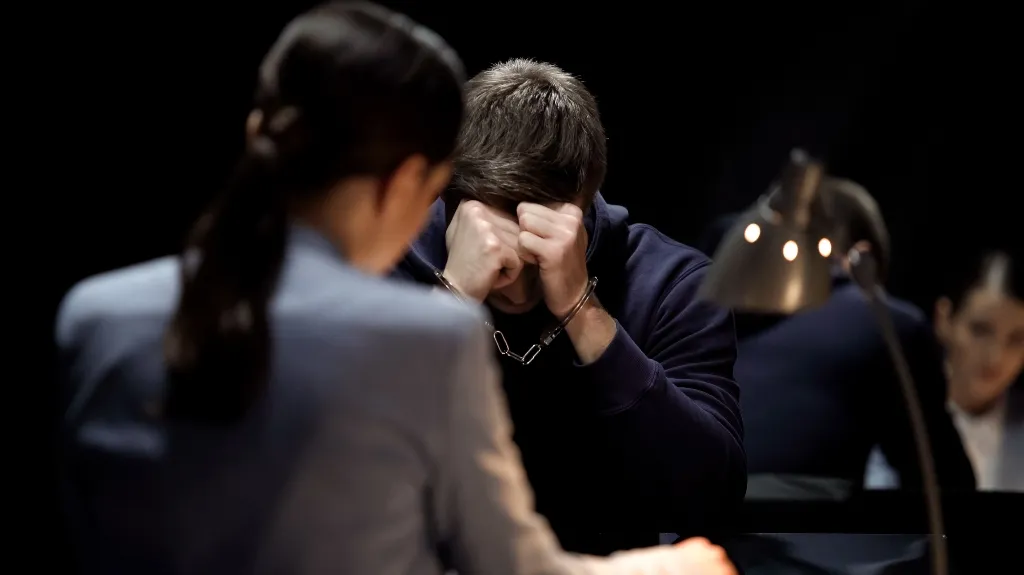
Stalking under California Penal Code § 646.9 is the crime of repeatedly following or harassing another person while making a credible threat that places them in reasonable fear for their safety or their family’s safety. It is one of the most fact-specific charges in California law — and one of the most commonly misunderstood, because it usually grows out of an emotionally charged situation like a breakup, a custody fight, or a soured friendship rather than the predatory stranger most people imagine. If you are facing a stalking charge in Murrieta, Temecula, Menifee, Lake Elsinore, Wildomar, Winchester, Canyon Lake, or French Valley, the case will be filed and heard at the Southwest Justice Center in Murrieta and prosecuted by the Riverside County District Attorney. Call (951) 400-4357 for a free, confidential consultation.
Key Takeaways
- Stalking (Penal Code § 646.9) is a wobbler — it can be charged as a misdemeanor or a felony, and it can be a felony even on a first offense. It is not “automatically” a misdemeanor unless you have priors.
- The charge has three core parts: a repeated course of conduct (following or harassing), a credible threat, and the intent to make someone reasonably fear for their safety. A single incident, however frightening, is not stalking.
- Misdemeanor stalking carries up to a year in county jail; felony stalking carries 16 months, two, or three years — and more (up to four or five years) when a restraining order or certain priors are involved.
- Stalking is not a mandatory sex-offender-registration offense. Registration is possible only on a felony conviction, only if the judge makes a specific finding, and only at the court’s discretion.
- A “credible threat” can be made by text, email, or social media — California’s stalking law expressly reaches electronic and online conduct.
What Counts as Stalking Under Penal Code § 646.9?
To convict you of stalking, the prosecution has to prove three things beyond a reasonable doubt, and missing any one of them defeats the charge. Under Penal Code § 646.9, the elements are: (1) you willfully and maliciously harassed another person, or willfully, maliciously, and repeatedly followed them; (2) you made a credible threat; and (3) you did so with the intent to place that person in reasonable fear for their own safety or the safety of their immediate family.
Two of those terms have precise legal meanings that decide most cases. “Harass” means a knowing and willful course of conduct that seriously alarms, annoys, torments, or terrorizes the person and serves no legitimate purpose. And a “course of conduct” means two or more acts over a period of time — however short — showing a continuity of purpose. That requirement is the dividing line people miss most often: a single act, no matter how alarming, is not stalking under this statute. One angry voicemail, one confrontation, one message — without a repeated pattern — does not meet the definition.
The “credible threat” element matters just as much. The threat does not have to be spoken out loud or written down; it can be implied by a pattern of conduct, and it can be communicated electronically. What the prosecution must show is that the threat was made with the apparent ability to carry it out, such that the target reasonably feared for their safety. Importantly, the law does not require proof that you actually intended to carry the threat out — only that you intended the words or conduct to be taken as a threat.
Is Stalking a Felony? When Felony Stalking Applies
Stalking is a wobbler, meaning the prosecutor decides whether to charge it as a misdemeanor or a felony based on the conduct, the alleged fear caused, and your record. The most important correction to a common myth: felony stalking does not require a prior conviction or a violated restraining order. A first-time stalking charge with no protective order in place can still be filed as a felony. Older write-ups that say felony stalking is “automatic only” with priors are simply wrong about how the wobbler works.
Here is how the penalties actually break down:
- Misdemeanor stalking — up to one year in county jail, a fine of up to $1,000, or both, plus probation and counseling.
- Felony stalking — 16 months, two, or three years.
- Stalking in violation of a restraining order or other court order (§ 646.9(b)) — two, three, or four years. The existence of a protective order against the same person raises the floor.
- Stalking after certain prior convictions (§ 646.9(c)) — two, three, or five years where you have a prior felony for domestic-violence corporal injury (§ 273.5), violating a protective order (§ 273.6), or criminal threats (§ 422), or a prior felony stalking conviction.
A felony conviction also carries collateral consequences that outlast the sentence, including a firearms prohibition — the broader firearm-rights framework explains how a conviction strips the right to own or possess a gun. The court can also impose a restraining order protecting the victim for up to ten years.
Credible Threats, Online Contact, and Cyberstalking
Stalking is no longer a crime that requires physically following someone. California’s statute expressly defines a credible threat to include one “performed through the use of an electronic communication device” — texts, emails, social media messages, and similar contact all qualify. That makes § 646.9 one of the broader anti-cyberstalking laws in the country, and it is increasingly how these cases arise: a barrage of messages after a breakup, repeated posts tagging or targeting someone, or tracking and contacting a person across platforms.
This is also where stalking overlaps with a close cousin, criminal threats. A pattern of threatening online messages can support both a § 646.9 stalking charge and a § 422 criminal threats charge — our discussion of when an online threat becomes a crime walks through where that line sits. Because digital conduct leaves a long evidentiary trail, the defense in an online-stalking case often turns on context: whether the messages were truly threatening, whether they were a repeated course of conduct or scattered venting, and whether they were protected expression rather than a credible threat.
Does a Stalking Conviction Require Sex Offender Registration?
No — stalking is not a mandatory sex-offender-registration offense, and this is one of the most important things to understand about a § 646.9 case. Registration is possible only when all of the following line up: the conviction is a felony, and the sentencing judge affirmatively decides to order registration under Penal Code § 290.006, which applies only where the court finds the offense was committed as a result of sexual compulsion or for purposes of sexual gratification and states its reasons on the record.
In other words, registration is discretionary, not automatic, and it does not attach to a misdemeanor at all. The legacy framing that registration follows “if prosecutors show” a sexual motive is misleading — it is the judge, at sentencing, on a felony, who makes that call, and only in the narrow subset of stalking cases with a genuine sexual-gratification finding. The vast majority of stalking convictions, including those arising from breakups and disputes, carry no registration requirement. Where a sexual component is alleged, though, the stakes rise sharply, and the case starts to intersect with the sex-offense registration framework — which is exactly the scenario where early, careful defense work matters most.
Stalking, Domestic Violence, and Restraining Orders
Most stalking cases in Southwest Riverside County are not stranger cases — they arise between people who know each other, often former spouses or partners, and frequently alongside a domestic violence charge. That overlap shapes the whole case. A temporary restraining order issued out of a family-law or DV matter at the Southwest Justice Center can convert later contact into felony-range stalking under § 646.9(b), and a prior DV conviction under § 273.5 can elevate a new stalking charge under § 646.9(c).
This is why stalking allegations that grow out of a breakup or custody dispute need to be handled with the restraining-order picture in full view. Contact that feels justified to a parent trying to see a child, or to someone retrieving belongings, can be read by a prosecutor as a continued course of conduct in violation of an order. Understanding exactly what an existing order prohibits — and documenting the context of any contact — is often the difference between a charge that holds and one that does not.
Defenses to a Stalking Charge
A stalking charge is fact-specific, which cuts both ways: it gives the prosecution several elements to prove, and it gives the defense several places to attack. The most common defenses include:
- No credible threat. If the communications or conduct were not a genuine threat — venting, hyperbole, or emotionally heated but non-threatening contact — a central element is missing.
- No course of conduct. Stalking requires a repeated pattern of at least two acts. A single incident, or unconnected events, does not qualify.
- No intent to cause fear. The conduct has to be aimed at placing the person in reasonable fear; conduct intended for another purpose, or genuinely misunderstood, does not meet the standard.
- Constitutionally protected activity. The statute expressly excludes constitutionally protected activity from both “course of conduct” and “credible threat,” and it does not apply to conduct during lawful labor picketing. First Amendment-protected expression is not stalking.
- Mistaken identity or false allegation. In high-conflict breakups and custody disputes, stalking allegations are sometimes exaggerated or fabricated for leverage, and the evidence does not survive scrutiny.
A defense attorney can also work to keep a wobbler charged as a misdemeanor rather than a felony, to avoid a registration finding where a sexual motive is alleged, and to resolve the case in a way that protects your record and your firearm rights.
Common Questions About Stalking Charges
Is stalking always a felony in California? No. It is a wobbler — chargeable as a misdemeanor or a felony. It can be a felony on a first offense, but many stalking cases are charged or resolved as misdemeanors.
Can I be charged with stalking for text messages or social media? Yes. A credible threat can be made through an electronic communication device, and online or text-based conduct is one of the most common ways stalking is charged today.
Will a stalking conviction make me register as a sex offender? Usually not. Registration is discretionary, applies only to felony convictions, and requires the judge to find the offense was committed for sexual gratification under § 290.006. Most stalking convictions carry no registration requirement.
Is one incident enough to be stalking? No. The law requires a course of conduct — at least two acts showing a continuity of purpose. A single act, however serious, is not stalking under § 646.9 (though it may support other charges).
Can I be charged with stalking after a breakup? Yes — and these are among the most common stalking cases. Repeated unwanted contact with a former partner, especially where a restraining order exists, is frequently charged under § 646.9.
Facing a Stalking Charge in Southwest Riverside County
Stalking cases are won and lost on the details — whether the contact was truly a credible threat, whether it was a repeated course of conduct, whether it was protected expression, and whether the prosecution can prove the intent to cause fear. They are also high-stakes, because a felony conviction can mean prison, a decade-long restraining order, lost firearm rights, and in narrow cases a registration finding. The earlier these issues are addressed, the more options remain.
If you have been arrested for or charged with stalking in Murrieta, Temecula, Menifee, Lake Elsinore, Wildomar, Winchester, Canyon Lake, or French Valley, the Law Office of Nic Cocis defends these cases at the Southwest Justice Center and throughout Southwest Riverside County. Learn more about our office and our case results, then call (951) 400-4357 for a free, confidential consultation.