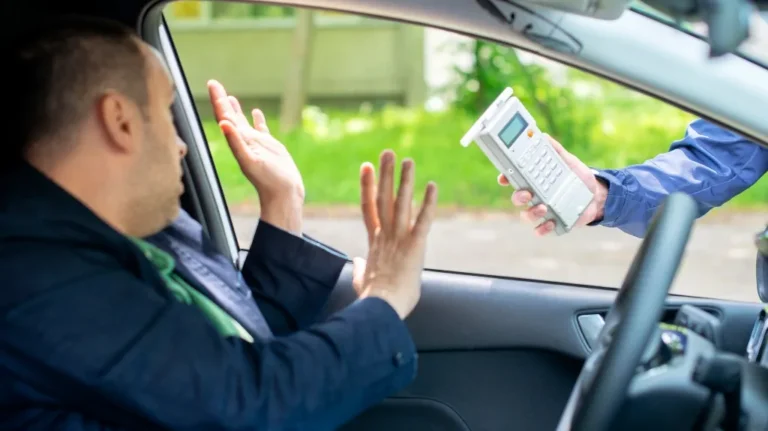
Being charged with possession for sale, when you know the drugs were only ever for your own use, is one of the more frightening positions in a drug case — because that one word, “sale,” is what turns a misdemeanor most people can put behind them into a felony that follows them for years. The charge usually starts from an ordinary fact: drugs found on you, in your car, or at your home. What makes it a sale case is not the drug or the amount alone, but the prosecution’s claim that you intended to sell it. That single line — simple possession versus possession for sale — is the whole ballgame, and most of the early defense work is spent fighting over which side of it your case lands on. If you are facing either charge anywhere in Southwest Riverside County — Murrieta, Temecula, Menifee, Lake Elsinore, Wildomar, Winchester, Canyon Lake, or French Valley — your case will be handled at the Southwest Justice Center at 30755 Auld Road in Murrieta, where our office has appeared on these calendars nearly every week since 1999. A Murrieta possession for sale attorney can begin contesting that line from the first contact with law enforcement, because moving a case from one side of it to the other changes everything that follows.
What’s the Difference Between Simple Possession and Possession for Sale?
The two charges can start from the identical fact — drugs found on you, in your car, or in your home — and end in completely different places.
Simple possession (Health & Safety Code § 11350 for narcotics like cocaine, heroin, and many prescription drugs, or § 11377 for methamphetamine) means possessing the substance for your own personal use. After Proposition 47, this is a misdemeanor in most cases, carrying up to a year in county jail and a fine of up to $1,000 — and, importantly, it usually qualifies for drug diversion, the treatment-based programs that can end in a full dismissal.
Possession for sale (Health & Safety Code § 11351) means possessing that same substance with the intent to sell it. It is a straight felony, and the consequences are an entirely different order of magnitude. The prosecution doesn’t have to prove you actually sold anything — only that you intended to. That intent is what they build the case around, and it is where the case is won or lost.
The reason the line matters so much is in the consequences, which the next sections lay out.
How California Charges Possession for Sale (HS § 11351)
Health & Safety Code § 11351 is a straight felony — meaning, unlike simple possession, it cannot be filed or reduced to a misdemeanor as long as it stands as a sale charge. A conviction carries two, three, or four years of incarceration and a fine of up to $20,000, with additional years possible for very large quantities of drugs like heroin, cocaine, or fentanyl. The statute reaches both street drugs and prescription medications — oxycodone, hydrocodone, and codeine among them — so a case built on a bottle of pills can carry the same felony weight as one built on cocaine.
Two consequences make § 11351 especially serious compared with simple possession. First, it is not eligible for Proposition 47 relief — Prop 47 reduced simple possession, not possession for sale, so a § 11351 conviction stays a felony on your record. Second, a person charged with possession for sale is generally ineligible for the drug-diversion programs that make simple possession survivable — the PC 1000 and Proposition 36 treatment tracks that can end in dismissal. For non-citizens, a § 11351 conviction is also a deportable offense with severe immigration consequences. Related sale-side statutes work the same way: § 11351.5 covers cocaine base, § 11378 covers methamphetamine for sale, and § 11352 covers actually selling or transporting drugs, with even longer terms.
Because diversion and Prop 47 are off the table while the charge stands as a sale, the entire defense strategy in a § 11351 case usually points at one goal: getting the charge back across the line to simple possession.
What About Marijuana? Possession for Sale Under HS § 11359
Marijuana is treated separately, and this is where the old version of this page was most out of date. Personal possession by adults is legal now, and licensed businesses can lawfully sell cannabis. But selling marijuana without a license is still a crime: Health & Safety Code § 11359 makes possession of marijuana for sale an offense.
The key change is that § 11359 is now a misdemeanor for most adults — punishable by up to six months in county jail and a fine of up to $500 — where before Prop 64 it was a straight felony. It becomes a felony only in specific situations: if you have a prior conviction for a serious or violent “super strike” felony or a registrable sex offense, if you have two or more prior § 11359 convictions, or if you knowingly sold or tried to sell to a minor (selling to a minor is charged separately and more harshly under § 11361). And if you carry an old felony conviction for marijuana possession for sale from before legalization, you may be able to petition to have it redesignated as a misdemeanor — something we cover in our guide on clearing an old marijuana conviction.
How Prosecutors Try to Prove Intent to Sell
Since intent to sell is what separates a misdemeanor (or, for marijuana, often a non-issue) from a felony, it is worth understanding exactly how the prosecution tries to prove it. Almost always, it is circumstantial — built from the scene rather than from any actual sale. The factors that come up again and again:
- Quantity beyond what one person would use — the single most common argument.
- Packaging — the drugs split into multiple baggies or containers rather than held in one.
- Scales or measuring devices.
- Large amounts of cash, especially in small denominations.
- Pay-and-owe sheets or ledgers.
- Text messages or other communications that appear to discuss sales.
None of these proves intent to sell by itself, and each has an innocent explanation that a defense can develop. A heavy personal user may legitimately carry a larger quantity. Cash is not contraband. A scale is as consistent with weighing one’s own purchase as with dealing. When our office reviews a § 11351 case, those factors — and how the search that produced them was actually conducted — are the first things we work through.
“It Was for Personal Use, Not Sale” — the Central Defense
In the majority of possession-for-sale cases, the most valuable work is not arguing that the drugs weren’t there — it is dismantling the inference that they were for sale. If the intent-to-sell evidence is thin, a § 11351 felony can be reduced to a § 11350 simple-possession misdemeanor, and that reduction changes the entire trajectory of the case: it takes the straight felony off the table, and it reopens the diversion and treatment options that a sale charge closes off. For many clients, that is the difference between a felony record and a path to dismissal.
Other defenses turn on the same facts that drive any possession case — whether you actually knew about the drugs and exercised control over them (a real issue when drugs are found in a shared car or home), and whether the search that produced the evidence was lawful in the first place. Those questions overlap heavily with simple-possession defense, which our drug crimes practice area covers in more depth. Where a case does involve an alleged actual sale or transport, or crosses into federal territory, see our drug sales page and our explainer on when a drug case goes federal.
Why a Murrieta Possession for Sale Attorney Matters Early
The decision that shapes a drug case most is the charging decision — whether the Riverside County District Attorney files the case as simple possession or as possession for sale — and it is made early, often before arraignment. That choice also determines where the case lands inside the courthouse: a simple-possession misdemeanor is handled on the misdemeanor calendar in Department S-104 at the Southwest Justice Center, while a § 11351 felony is arraigned and litigated in the felony departments such as S-204. The I-15 and I-215 corridors that run through Temecula and Murrieta carry steady drug-interdiction traffic stops, and a large share of these cases begin exactly there — which means the lawfulness of the stop and search is frequently the first place to push.
The earlier the intent-to-sell evidence is challenged, the better the chance of keeping the case on the misdemeanor side of the line — before the prosecution commits to a sale theory it is reluctant to give up. Equally important is what you should not do: what you don’t say to officers about whose drugs they were or what you planned to do with them, and what you don’t say in a recorded jail call. People talk their way into a sale charge more often than they talk their way out of one.
The Law Office of Nic Cocis has defended drug charges — from simple possession to possession for sale — throughout Murrieta, Temecula, Menifee, Lake Elsinore, Wildomar, Winchester, Canyon Lake, and French Valley for more than 25 years. Our case results page reflects how cases like these are handled.
If you have been arrested or charged with possession for sale, call the Law Office of Nic Cocis at (951) 400-4357 for a free, confidential consultation.