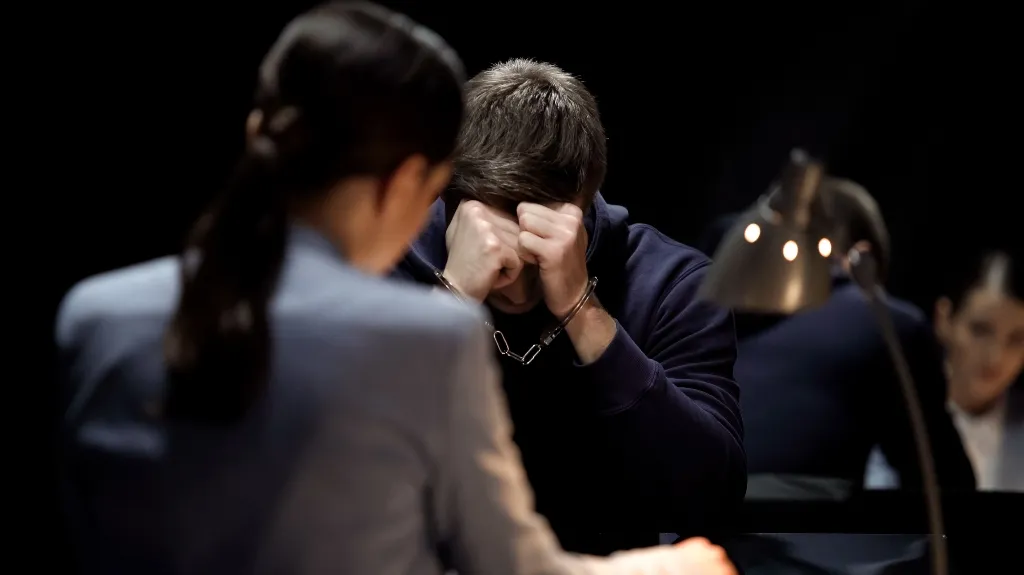
Almost no one is arrested for “domestic violence” by itself. What actually arrives — on the booking sheet, then on the complaint the District Attorney files a few days later — is a stack: corporal injury, criminal threats, damaging a phone line, vandalism, sometimes false imprisonment, sometimes a protective-order violation on top of all of it. Five or six counts out of a single argument that lasted twenty minutes. If you or a family member is looking at a charging document like that after an arrest in Murrieta, Temecula, Menifee, Lake Elsinore, Wildomar, Winchester, Canyon Lake, or French Valley, the first thing to understand is why there are so many charges — and the second is that a stack is not the same thing as a strong case. Call (951) 400-4357 to talk it through.
Domestic violence is treated with real seriousness in California, and for good reason — these cases can involve genuine harm. Nothing here minimizes that. But an accused person is still presumed innocent, still entitled to test every charge individually, and still entitled to a defense that takes the charging document apart count by count. Understanding what each charge in the stack actually requires is where that starts. For the step-by-step of what to do in the hours right after an arrest, our domestic violence defense coverage walks through the first 48 hours; this guide explains the charges themselves.
Why One Incident Produces So Many Charges
The stacking is not an accident or an overreach by any single officer. California criminal law lets the prosecution charge every distinct criminal act that occurred during an incident as its own count, even when they all happened in the same room in the same few minutes. Raising a hand and causing an injury is one act. A threat shouted during the struggle is another. Grabbing the phone out of someone’s hand so they can’t dial 911 is another. Putting a fist through a wall or smashing a television is another. Blocking the doorway so the other person can’t leave is another. Each of those maps to a different statute, and the District Attorney charges each one.
There is a strategic reason for it, too. A stack of charges gives the prosecution leverage. The more counts on the complaint, the more the case can feel overwhelming, and the more room there is to offer a plea that drops some counts in exchange for a guilty plea on others. Recognizing the stack for what it is — a collection of separate, individually contestable charges, several of which are often the weakest part of the case — is the beginning of dismantling it rather than being buried by it.
The Core Charge: Corporal Injury — Penal Code § 273.5
The charge at the center of most domestic violence stacks is Penal Code § 273.5, corporal injury to a spouse, cohabitant, dating partner, or co-parent. What makes § 273.5 serious is how little it takes to trigger it: the law requires a “traumatic condition,” but that term reaches any visible or internal injury, however minor — a bruise, a red mark, a scratch. There is no requirement of a serious or lasting injury.
Section 273.5 is a wobbler, meaning the prosecution can file it as a misdemeanor or a felony. As a felony it carries two, three, or four years in custody and a fine of up to $6,000; a prior qualifying domestic-violence conviction within the previous seven years raises the exposure further. Whether it is charged as a felony or a misdemeanor usually turns on the alleged injury and the defendant’s record — which means the felony-versus-misdemeanor line is itself something a defense fights over from the very first court date. Because § 273.5 anchors the stack, the strength or weakness of the evidence on this single count — particularly whether a genuine “traumatic condition” can be proven — often drives what happens to everything else.
The Charges That Cluster Around It
The remaining counts in a domestic violence stack are the satellite charges. Each is its own offense with its own elements, and each is contestable on its own terms.
Criminal threats — Penal Code § 422. If a threat was made during the incident, it is frequently charged separately. This is the most consequential satellite, because § 422 is a “strike” under California’s Three Strikes law — so a single threats count can inject strike exposure into a stack that otherwise contains none. Reducing or defeating the § 422 count is often the highest-value move in the whole case. The deeper analysis of what the prosecution must prove on a threats charge is covered in our criminal threats coverage.
Damaging a phone line — Penal Code § 591. This is the charge most people have never heard of and are stunned to see. Section 591 makes it a crime to maliciously cut, remove, obstruct, or damage a telephone or utility line — and California courts read it broadly enough to cover grabbing a partner’s cell phone and smashing it, or pulling out a landline cord, during a dispute. It is a wobbler carrying up to three years as a felony and a fine up to $10,000. The reason prosecutors value it goes beyond the count itself: a § 591 charge lets them argue the defendant was trying to stop the other person from calling for help, which they use as evidence of intent and control. That framing has to be confronted directly, because it colors how a jury hears the entire incident.
Vandalism — Penal Code § 594. Property broken during the incident — a phone thrown against the wall, a hole punched in drywall, a car window — supports a vandalism count. Whether it is a misdemeanor or a wobbler turns on the dollar amount of the damage, with $400 as the dividing line. The full treatment lives in our vandalism coverage.
False imprisonment — Penal Code § 236. If the allegation includes blocking someone from leaving — standing in a doorway, holding an arm, taking keys or a phone so they couldn’t go — that can be charged as false imprisonment. It does not require moving the person anywhere or locking any door; preventing free movement is enough. It is a wobbler, more serious when violence or menace is alleged. How these charges are actually proven and defended is covered in our false imprisonment coverage.
Violating a protective order — Penal Code § 273.6. This count appears only when an order was already in place at the time of the incident — an existing restraining order or a criminal protective order from a prior case. A first violation is a misdemeanor (up to a year in county jail), becoming a wobbler only on a later violation involving violence. Its bigger danger comes after the arrest, not during it: once the court issues a protective order in the new case, ordinary contact — a reconciliation text, a “just want to talk” meeting the other person invites, even a tagged social-media post — becomes a fresh § 273.6 charge. We have seen otherwise defensible cases damaged by a single well-meaning message sent in the days after an arrest.
What Ties the Whole Stack Together
Several consequences attach to the stack as a whole, not to any one count, and they are often what matters most to the rest of someone’s life.
Mandatory domestic-violence probation terms. Any conviction in the stack that is treated as domestic violence triggers Penal Code § 1203.097, which imposes a mandatory minimum three-year probation period, a 52-week batterers’ intervention program, a protective order, and assorted fees and fines — regardless of which specific count the conviction lands on. This is why pleading to a “lesser” satellite charge that is still a domestic-violence offense does not necessarily avoid the core DV consequences.
A firearms ban. A domestic-violence conviction — even a misdemeanor — brings a firearms prohibition. California imposes a ten-year ban under Penal Code § 29805 (lifetime for a felony under § 29800), and federal law adds a lifetime ban for anyone convicted of a misdemeanor crime of domestic violence under 18 U.S.C. § 922(g)(9). For anyone whose work or life involves firearms, this consequence can outweigh the sentence itself.
Strike exposure. As noted, the § 422 count is the one that can turn a non-strike stack into a strike case — a distinction that follows a person for the rest of their life and reshapes the exposure on any future charge.
The criminal protective order. At arraignment the court will issue a protective order under Penal Code § 136.2 covering the duration of the case, which is what makes the post-arrest § 273.6 trap so easy to fall into. And for a non-citizen, several of these offenses — § 273.5 in particular — carry serious immigration consequences that have to be weighed in any resolution.
Why the Stack Is Also an Opportunity
A long charging document is frightening, but the structure that makes it frightening is also what makes it workable. Because each count stands on its own elements, each can be challenged on its own — and the satellite charges are frequently the softest part of the case. Many of them are wobblers that can be reduced or dismissed; the § 591 phone count depends on proving malice and damage; the vandalism count depends on the dollar threshold; the false-imprisonment count depends on whether free movement was truly prevented; the threats count depends on whether a statement met the demanding legal standard for a criminal threat. Stripping the satellites away — especially neutralizing the § 422 strike — and then focusing on whether the core § 273.5 “traumatic condition” can actually be proven is how a stack that looked overwhelming on day one becomes something far more manageable by resolution.
How These Cases Move Through the Southwest Justice Center
In Southwest Riverside County, domestic violence cases are filed by the Riverside County District Attorney and heard at the Southwest Justice Center at 30755 Auld Road in Murrieta. The District Attorney’s office treats these cases as a priority and tends to charge the full stack rather than a single count, and the criminal protective order is issued at the first appearance. Our office has appeared at this courthouse on a near-weekly basis since 1999, and that familiarity — with how the DA’s domestic-violence unit evaluates these files, how the judges on this calendar handle protective orders and bail, and which satellite charges tend to fall away under pressure — is the practical groundwork for taking a stack apart. For families dealing with the immediate aftermath of an arrest, the first 48 hours are their own subject, and the action steps for that window are set out in our domestic violence coverage.
Talk to a Murrieta Domestic Violence Defense Attorney
A stack of domestic violence charges is built to look insurmountable, but it is a collection of separate cases, and several of them are usually the weakest links in the chain. The Law Office of Nic Cocis defends people facing corporal injury, criminal threats, phone-line, vandalism, false imprisonment, and protective-order charges across Murrieta and Southwest Riverside County, and the work starts with reading the charging document as what it is — a set of individual counts, each of which has to be proven. If you or someone in your family is facing domestic violence charges, contact our office or call (951) 400-4357.