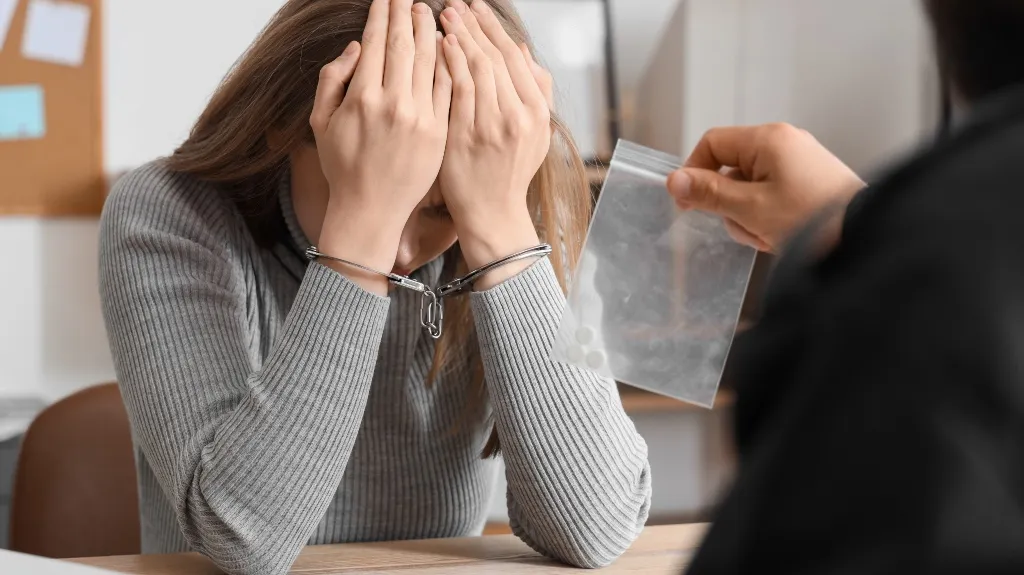

If you were arrested in a prostitution sting last night — or your spouse, partner, or family member just called you from the Southwest Justice Center holding area — the next 72 hours will shape this case. Call (951) 400-4357 as soon as you can. Nic Cocis has defended these arrests in Murrieta, Temecula, Menifee, Lake Elsinore, Wildomar, Winchester, Canyon Lake, and French Valley for over 25 years. The arrest will be processed through the Southwest Justice Center in Murrieta, where you or your loved one will be arraigned on a misdemeanor charge under California Penal Code § 647(b) — the state’s prostitution and solicitation statute.
The single most important fact to understand from the start: a standard conviction under PC § 647(b), the prostitution statute, does not require sex offender registration under PC § 290, which is California’s sex offender registry law. The case is still serious, but it is not a registration case in the standard configuration. That is the answer to the question almost everyone in this position asks first, and it is worth absorbing before the rest of the practical decisions in the next three days.
Do these things now after a Murrieta prostitution sting arrest
Decline any further contact with law enforcement. If detectives reach out for a “follow-up conversation” or a chance to “clear this up,” decline politely and ask them to contact your attorney instead. Same answer if they show up at your home or work. The arrest itself is not the end of the investigation. What you say in a follow-up contact after release is used to support charging — not to help you.
Document every law enforcement contact going forward. Detectives sometimes reach back out in the days after a sting arrest — by phone, by knock, or by message — for a follow-up or a chance to give your side. The answer is no, and the refusal should be unambiguous. After every encounter, write down the date and time, the officer’s name and badge number if you can get them, what they asked, and what you said. Verbal invocations of counsel are sometimes ignored or misremembered in police reports; a contemporaneous record on your end is what makes the invocation defensible later if there is ever a dispute.
Do not consent to a phone search. Sting cases almost always involve a phone. Detectives will ask, and they will often phrase the request as “do you want to make this easier” or “can you just show me the messages.” If they had a warrant, they would not be asking. Consent waives Fourth Amendment protections that may be the defense’s strongest position in the case. The answer is no.
Write down everything you remember while it is fresh. Time of first contact, platform used (the ad website, the dating app, the messaging service), what was said in messages versus what was said in person, where you went, who approached whom, what money or items changed hands or did not, what you actually said versus what the officer claims you said. Do this within 24 hours. Memory fades fast, and the police report will be the only contemporaneous record of the arrest unless you build your own.
Preserve text and email records before anything is deleted. Screenshot every message thread with the alleged decoy account. Take the screenshots before logging into the app from a different device, because some apps mark messages as read or delete them automatically. The original chain of communications is often where the entrapment defense or the failure-of-act-in-furtherance defense begins.
Call a defense attorney before charges are filed. The prosecution typically reviews these files within 30 to 60 days of arrest. Pre-filing intervention by a defense attorney — submitting evidence to the deputy district attorney before they make a charging decision — sometimes prevents the case from being filed at all, or results in a charge lower than what the officer recommended. (951) 400-4357.
Don’t do these things
Don’t post about it on social media or text friends to “explain.” Anything posted publicly or sent in a text becomes evidence. So does a deleted post in the right case.
Don’t contact the alleged decoy or anyone connected to the operation. That includes responding to the original ad, calling the phone number that was used, or showing up at the location to see what happened. All of it generates more evidence, and in some configurations it can support an additional charge.
Don’t give a “voluntary statement” after release. Detectives sometimes call in the days after a sting arrest offering a chance to “tell your side” or “clear up some questions.” It is often presented as informal — a phone call rather than a station interview, framed as helpful rather than adversarial. There is no version of this that helps the defense. A voluntary statement made after release is fully admissible at trial, and the questions are designed to produce admissions. The only correct response is to decline and refer the request to your attorney.
Don’t take a polygraph “to clear things up.” A polygraph result favorable to you is not admissible in most California criminal proceedings. An unfavorable result will be used against you. The risk-reward asymmetry makes this almost never a good idea outside of a strategy designed with your attorney.
Don’t discuss the case on jail phone lines or in visitation. If your family member is still in custody, do not discuss the facts of the arrest on a jail phone call or during visitation. Both are recorded. Anything said on a recorded jail line can be transcribed and used at trial. Save substantive discussion for the in-person attorney visit, which is not recorded. The same applies in reverse if you were the one in custody and made calls during processing — assume those recordings exist and will be reviewed.
Don’t assume “I’ll just plead guilty and put this behind me.” A standard prostitution conviction under PC § 647(b) does not require sex offender registration — but it is still a conviction for an offense involving sexual misconduct, and it shows up in background checks, professional licensing reviews, security clearance investigations, and immigration consequences. Plead-guilty-and-move-on math often looks worse three years later than it looks at arraignment.
Why this matters in a Murrieta prostitution sting case
The overwhelming majority of solicitation arrests in Southwest Riverside County come from sting operations — online stings run on escort sites and certain apps, hotel-room operations where officers wait at a pre-arranged location, and parking-lot stings in commercial corridors. Stings are designed to produce arrests. The investigative file is built with prosecution in mind from the first message exchanged with the decoy.
That same structure also creates defenses. The prostitution statute — the full text of PC § 647(b) is available at leginfo.legislature.ca.gov — requires not just an agreement to engage in prostitution but an act in furtherance of that agreement. Something more than the conversation itself. What counts as an act in furtherance is genuinely contestable. So is the question of who initiated each step of the exchange, whether the defendant actually intended to follow through, and whether the operation crossed the line into entrapment.
On the registration question, the deeper picture: the sex offender registry law (PC § 290) applies to a specific list of offenses, and the prostitution statute is not on that list in the typical case. Rare exceptions exist under PC § 290.006 — a separate provision that lets a judge order registration outside the standard list when the judge makes specific findings — but those orders are unusual and they do not apply to most prostitution arrests. For a fuller walk-through of how the prostitution statute actually works — elements, penalties, defenses, diversion options — see the firm’s Prostitution defense overview and the broader Sex Offenses practice area.
What happens next — booking, filing, arraignment
After booking, most defendants in prostitution sting cases are released on their own recognizance or on bail within hours. The file then moves to the Riverside County District Attorney’s office for review. A deputy district attorney decides whether to file at all, what to file, and whether to add any related counts — for example, loitering with intent to commit prostitution under PC § 653.22, or other counts depending on the operation.
If charges are filed, arraignment happens at the SWJC, typically within several weeks of arrest. At arraignment the formal charges are read and a plea is entered. Misdemeanor diversion may be available — under PC § 1001.95, the misdemeanor diversion law allows the court to pause prosecution while the defendant completes conditions set by the court, with the case dismissed at successful completion. Whether diversion is offered depends on the facts of the case and the deputy DA’s position.
Anything done by a defense attorney in the gap between arrest and filing is often the most productive work on the case. Pre-filing evidence submissions, character letters where appropriate, and direct contact with the assigned deputy DA can change the outcome. The window between arrest and the filing decision is the most influenceable point in the entire timeline.
Why a Murrieta prostitution sting arrest attorney matters early
The cases where outcomes most clearly improve are the ones where a defense attorney was involved before the file was charged. Once charges are formally filed, the case has a docket number, a deputy DA assigned, and an internal momentum that is harder to redirect. Pre-filing is the window where outright declination, charge reduction, or diversion are most achievable.
Nic Cocis has defended prostitution and solicitation cases — the misdemeanor charges that come out of sting operations under California’s prostitution statute — in Murrieta, Temecula, Menifee, Lake Elsinore, Wildomar, Winchester, Canyon Lake, and French Valley for over 25 years. The cases handled include sting arrests where the act-in-furtherance element is contestable, online operations where an entrapment defense applies, and matters where pre-filing intervention resulted in no charge being filed at all. See case results for outcomes in similar matters, and about Nic Cocis for background on the practice.
If you or a family member was just arrested in a prostitution sting and you are reading this in the first 72 hours, the most useful thing to do right now is to call. (951) 400-4357.