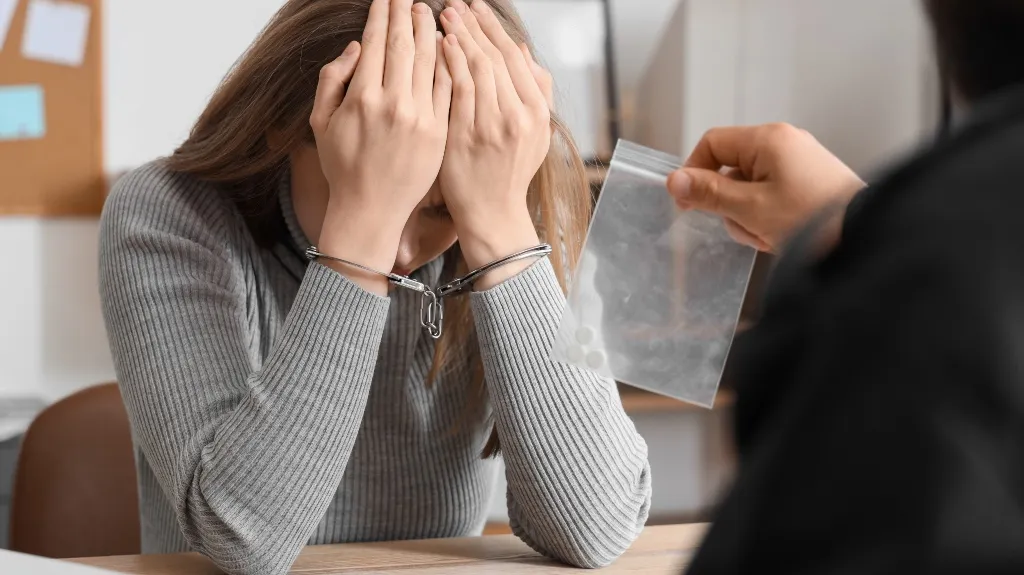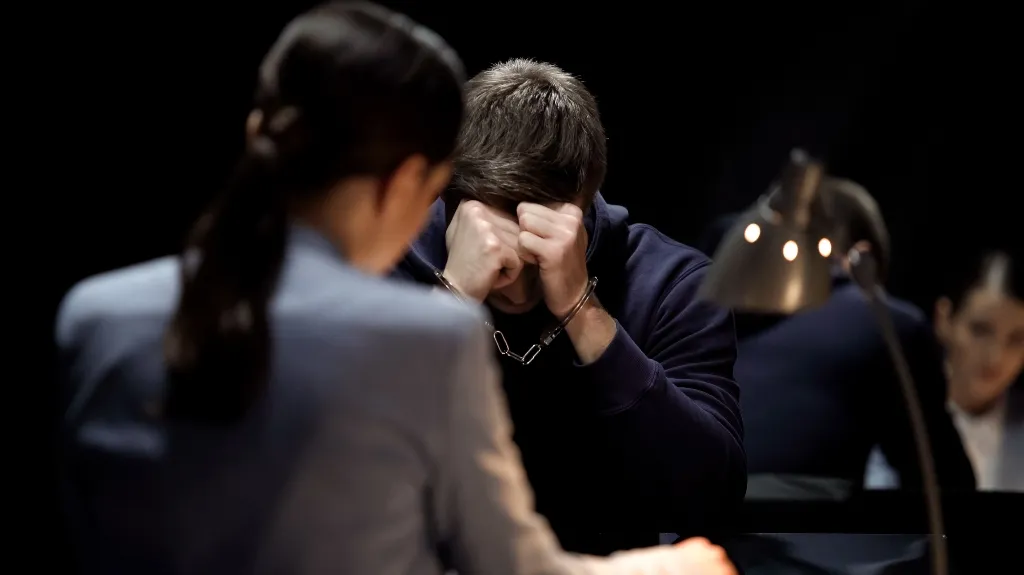
For licensed professionals in Murrieta, Temecula, Menifee, Lake Elsinore, Wildomar, Winchester, Canyon Lake, and French Valley, a criminal arrest is not one problem — it is two. The criminal case itself moves through the Southwest Justice Center on its own track, but every California licensing board also receives notice of the arrest and conducts its own review under the Business and Professions Code. By the time a professional appears at a board hearing in Sacramento or before the Office of Administrative Hearings, the most important decisions about that hearing — what was pleaded to, what was dismissed, what was reduced — have already been made in the criminal courtroom. That is why Murrieta professional license defense, properly understood as criminal-defense work for licensed professionals, begins at the arraignment desk, not at the administrative hearing.
How a Criminal Charge in Southwest Riverside County Becomes a Licensing Matter
When a Temecula registered nurse is arrested at an I-15 sobriety checkpoint, when a Murrieta general contractor is charged with grand theft of building materials, when a Menifee teacher is named in a domestic violence call, two parallel processes begin. The criminal case proceeds through arraignment, pretrial conferences, and either a plea or trial at the SWJC. The licensing case begins when the board receives notice — sometimes from the licensee’s own mandated self-report, sometimes from the fingerprint-based notification systems most California boards subscribe to through the Department of Justice, sometimes from law enforcement directly.
Most California boards do not wait for a conviction to act. Some have authority under Business and Professions Code § 494 to issue interim suspension orders before any hearing if the underlying conduct presents a danger to public health or safety. Others open investigations the moment they receive notice of an arrest. And almost every California licensing board treats the criminal record of conviction — once entered — as conclusive proof under Business and Professions Code § 493 that the conviction occurred. The board cannot retry the criminal case, but it can and will use the conviction as the foundation of a licensing accusation.
This is why the criminal case dictates so much of what follows. A felony plea, a misdemeanor reduction under Penal Code § 17(b), a deferred entry of judgment, a successful pre-trial diversion completion, a dismissal under Penal Code § 1385 — each carries a different downstream consequence at the board.
Business & Professions Code §§ 480 and 490: The Two-Track Statutory Framework
California’s two foundational statutes for criminal-conviction-based licensing discipline are Business and Professions Code § 480 and § 490. They look similar but apply at different points.
Section 480 governs license applicants. A board may deny an application only if the applicant has been convicted within the preceding seven years of a crime “substantially related to the qualifications, functions, or duties” of the regulated profession. The seven-year window runs from the date of application or release from incarceration, whichever is later. The seven-year limit does not apply to a serious felony defined in Penal Code § 1192.7 or to a conviction requiring sex offender registration under Penal Code § 290(d)(2) or (d)(3).
Section 490 governs existing licensees. A board may suspend or revoke an existing license on the same substantially-related ground, but the seven-year cap of § 480 does not apply in the same way. Discipline for current licensees is more open-ended in timing, and — as discussed below — expungement under Penal Code § 1203.4 does not block § 490 discipline the way it blocks § 480 denial.
Two more sections complete the framework. Section 493 makes the record of conviction conclusive evidence the conviction occurred — meaning the licensee cannot relitigate guilt at the board hearing, though the board may inquire into circumstances to fix the degree of discipline. Section 494 authorizes interim license suspensions in cases involving immediate danger to the public, the licensing-law equivalent of a no-bail hold.
The pattern is consistent: the criminal disposition is rarely the end of the matter. It is the input the board will use, almost always as conclusive evidence, against the licensee.
AB 2138 and the “Substantially Related” Test
Assembly Bill 2138, signed in September 2018 and effective July 1, 2020, was the most significant California reform on professional licensing and criminal records in a generation. AB 2138 amended Business and Professions Code §§ 480, 481, 482, 488, 490, 492, and 493, and added § 480.2.
The reform tightened the “substantially related” test. A board can no longer treat any criminal conviction as automatically disqualifying. The conviction must bear a real relationship to the work the license authorizes — a nurse’s prescription-fraud conviction is substantially related; a contractor’s first-time DUI conviction, in many cases, is not. Each board must publish written criteria, mandated by § 481, describing how it determines substantial relationship.
AB 2138 also imposed the seven-year look-back under § 480 with the narrow Penal Code § 1192.7 and § 290 carve-outs, and codified rehabilitation evidence requirements in § 482. Boards must now consider concrete rehabilitation indicators — completion of probation without violation, sustained employment in a related field, character references, professional reviews — in licensing decisions.
For six specific boards — the California Board of Accountancy, the Contractors State License Board, the Bureau of Security and Investigative Services, the Cemetery and Funeral Bureau, the Department of Real Estate, and the Professional Fiduciaries Bureau — felony financial crimes carry a stricter “directly and adversely related” standard. These are the fiduciary boards, and the Legislature treated financial-fitness convictions as a uniquely serious red flag.
A few important boards stand outside the AB 2138 framework entirely. The State Bar of California operates under its own discipline rules at Business and Professions Code § 6101 with proceedings in State Bar Court rather than the Office of Administrative Hearings. The Department of Insurance, the Department of Social Services, and a handful of others have their own statutory schemes.
Which California Licensing Boards Are Most Affected by Criminal Convictions
Across the Department of Consumer Affairs there are roughly forty regulated boards, but a smaller set sees most of the criminal-conviction discipline:
- Medical Board of California (Business and Professions Code § 2236) — Physicians must report any felony charge or conviction. The board treats convictions involving substance abuse, fraud, sexual misconduct, and crimes of moral turpitude as substantially related, often regardless of the underlying medical-practice connection.
- California Board of Registered Nursing (Business and Professions Code § 2761) — Nurses face discipline for any “substantially related” conviction, and the BRN has been particularly aggressive on DUI, theft, drug possession, and allegations involving patient interaction. In Southwest Riverside County, where the major hospital systems and skilled nursing facilities employ thousands of RNs and LVNs across Murrieta, Temecula, and Menifee, BRN action follows almost every criminal filing.
- California State Bar (Business and Professions Code § 6101) — Attorneys must self-report any felony charge under Business and Professions Code § 6068(o)(4); discipline runs through State Bar Court.
- Contractors State License Board (Business and Professions Code § 7123) — Felony financial crimes trigger the “directly and adversely related” test; theft and fraud convictions are usually treated as substantially related. Southwest Riverside County’s residential and commercial construction sector — concentrated in the I-15 corridor and the Temecula Valley — means CSLB-licensed contractors and tradespeople appear regularly in SWJC dockets on grand theft, fraud, and unlicensed-contracting charges under Business and Professions Code § 7028.
- Department of Real Estate (Business and Professions Code § 10177) — Broker and salesperson licenses are heavily scrutinized after any fraud, theft, or financial-misconduct conviction.
- Commission on Teacher Credentialing (Education Code § 44424) — Teaching credentials face mandatory revocation for certain sex offenses, controlled-substance offenses, and crimes involving children. Teachers also face dismissal under Education Code § 44932 separately from CTC action.
- California Board of Pharmacy, California Board of Psychology, California Board of Behavioral Sciences — All apply the substantially-related test, and tend to discipline aggressively on substance-abuse and dishonesty offenses.
For every one of these boards, the licensing accusation is filed by the board’s enforcement counsel, the matter is heard before an administrative law judge at the Office of Administrative Hearings under the California Administrative Procedure Act (Government Code § 11500 et seq.), and the ALJ issues a proposed decision the board may adopt, modify, or non-adopt.
Reporting Obligations Begin the Day You Are Arrested
One of the most consequential — and most missed — features of California licensing law is that most boards require licensees to self-report criminal events long before any conviction occurs. The Medical Board requires physician self-reporting of any felony “indictment, information, or arrest” within 30 days under Business and Professions Code § 802.1. Business and Professions Code § 6068(o)(4) requires attorney self-reporting of felony charges within 30 days. Nurses have similar reporting requirements under California Code of Regulations Title 16. The Contractors State License Board, the Department of Real Estate, and the Board of Pharmacy all impose their own reporting timelines.
These deadlines run from the underlying event, not from conviction. A licensee who waits until the criminal case is over to inform the board has often already missed the reporting window, and the failure to report becomes its own ground for discipline — sometimes more serious than the underlying offense.
This is why a criminal defense attorney’s first conversation with a licensed professional must immediately identify the relevant board, the relevant reporting statute, and the relevant deadline. There is no waiting for the criminal case to develop.
Murrieta Professional License Defense Starts in the Criminal Case
This is the core of what we do. The Law Office of Nic Cocis is a criminal defense practice with over 25 years of trial experience at the SWJC, in federal court, and statewide. For our licensed-professional clients, the criminal case is the licensing case — because what gets pleaded to, what gets dismissed, and what gets reduced determines what the board can use under Business and Professions Code §§ 480 and 490.
At the SWJC, the Riverside County District Attorney’s Office handles thousands of cases per year. A plea offer that looks identical on paper to two professionals — say, a misdemeanor plea to disturbing the peace under Penal Code § 415 — can have radically different licensing consequences depending on which board reviews it and how that board defines “substantially related” under its published criteria. The local plea practice in Riverside County, the local diversion options available at the SWJC, and the local relationships with the DA’s specific charging deputies are all part of what shapes the licensing outcome.
Murrieta professional license defense, viewed from the criminal-defense side, is not something that begins when the board’s accusation arrives. It begins at arraignment and continues through every plea negotiation. The strategic questions are concrete:
- Is a misdemeanor reduction available under Penal Code § 17(b)?
- Is the offense substantially related under the relevant board’s published criteria?
- Will a plea to a non-substantially-related lesser offense — disturbing the peace under Penal Code § 415, for example, in a case originally charged as battery — change the licensing analysis entirely?
- Is the case eligible for pre-trial diversion under Penal Code § 1001.95, military diversion under Penal Code § 1001.80, or mental health diversion under Penal Code § 1001.36, each of which avoids a conviction altogether?
These are the questions that determine licensing outcomes. A criminal defense attorney who does not ask them on behalf of a licensed professional is leaving the license on the table.
Why Expungement Under Penal Code § 1203.4 Does Not Fully Shield Your License
Many licensed professionals believe that expungement under Penal Code § 1203.4 will protect their license. The reality is more complicated.
For license applicants under Business and Professions Code § 480(c), an expunged conviction generally cannot be the sole basis for denial. AB 2138 strengthened that protection in 2020. A future applicant with an old, expunged conviction has a strong statutory shield.
For existing licensees under Business and Professions Code § 490, expungement does not work the same way. Section 490 explicitly authorizes board discipline “irrespective of a subsequent order under Section 1203.4 of the Penal Code.” A current licensee whose case was expunged years ago can still face discipline based on the underlying conviction, particularly if the board only recently learned of it. The expungement reduces the public-facing impact, but it does not extinguish the conviction for licensing-discipline purposes once a license has issued.
Senate Bill 731, the 2022 automatic-relief reform, adds more nuance. SB 731 provides automatic sealing of most felony arrest and conviction records four years after completion of probation for eligible offenses, but the relief is expressly limited where licensing is concerned. The conviction record remains available to licensing agencies under Penal Code § 851.93 and § 1203.425. The criminal disposition itself remains the decisive factor.
In other words, post-conviction relief is valuable but not a substitute for getting the criminal disposition right the first time. That is the criminal-defense leverage point. For a fuller overview, see our expungement practice area page.
Where Our Role Ends and Administrative Counsel Begins
A word about scope. The Law Office of Nic Cocis represents licensed professionals through the criminal case itself — arraignment, pretrial motions, plea negotiations, trial, and post-conviction relief where appropriate. We do not appear at the Office of Administrative Hearings on the licensee’s behalf, and we do not draft the formal response to a Statement of Issues or an Accusation. Those proceedings are typically handled by attorneys whose practice is dedicated to administrative law and licensing defense, who appear regularly before specific boards and know their published criteria, internal patterns, and settlement practices.
What we do is make sure the criminal disposition gives administrative counsel the strongest possible material to work with. We coordinate where useful, refer where appropriate, and identify licensing issues that affect criminal strategy from the first conversation. For most licensed professionals facing charges in Southwest Riverside County, that work decides the outcome — long before any board hearing is scheduled.
The criminal case is the leverage point. The call to a criminal defense attorney is the first move, not the last.
If you are a doctor, nurse, attorney, contractor, real estate agent, teacher, or any other licensed professional in Murrieta, Temecula, Menifee, Lake Elsinore, Wildomar, Winchester, Canyon Lake, or French Valley facing criminal charges in Southwest Riverside County, your license and your livelihood depend on what happens at the criminal-defense table. Nic Cocis has over 25 years of trial experience defending professionals whose careers turn on the criminal disposition — see representative case results for examples.
Call the Law Office of Nic Cocis at (951) 400-4357 for a confidential consultation.