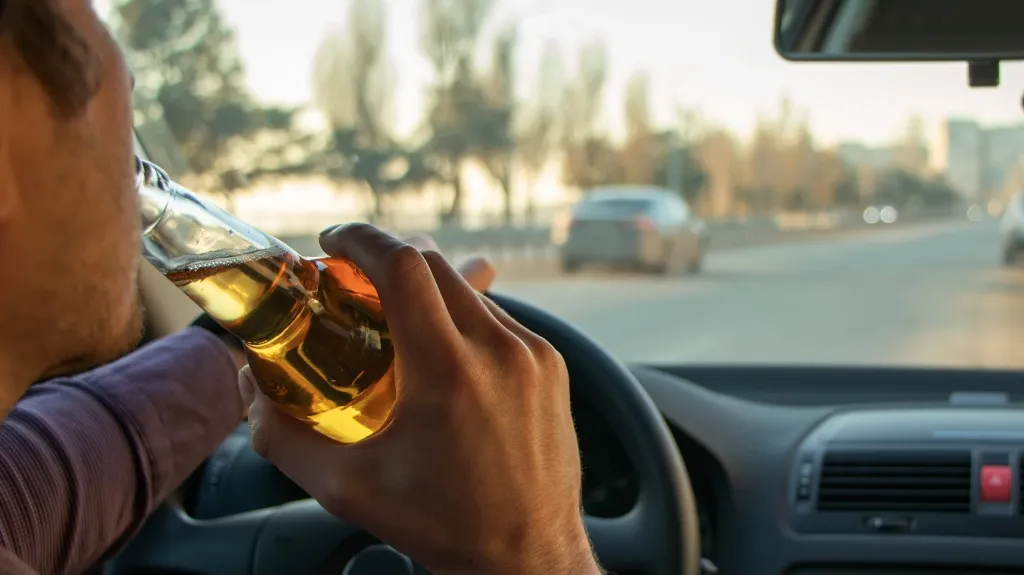
If you were pulled over and arrested for DUI anywhere in Murrieta, Temecula, Menifee, Lake Elsinore, Wildomar, Winchester, Canyon Lake, or French Valley, there is a good chance the police report describes you as having displayed the “objective symptoms of intoxication.” It is one of the most common phrases in a California DUI report — and one of the most misunderstood. Bloodshot eyes, an odor of alcohol, slurred speech: officers treat these as the gateway to a DUI investigation, and prosecutors lean on them in court. But these observations are subjective, they almost always have innocent explanations, and they are not the same thing as proof that you were actually impaired. Cases from across Southwest Riverside County are prosecuted at the Southwest Justice Center in Murrieta, and understanding how these symptoms are used — and challenged — is the starting point of a real defense.
Key Takeaways
- “Objective symptoms of intoxication” is the standard language officers use to justify a DUI investigation and arrest — things like bloodshot eyes, odor of alcohol, slurred speech, and unsteady balance.
- These symptoms are used to establish probable cause. They are not proof of impairment and not proof of a blood alcohol concentration (BAC) of 0.08% or higher.
- Almost every “classic” symptom has an innocent, non-alcohol explanation — allergies, fatigue, contact lenses, crying, or simply the hour of the night.
- Field sobriety tests and the handheld roadside breath test are generally voluntary before arrest for most California drivers. The chemical test after a lawful arrest is not.
- A DUI defense attorney challenges the officer’s observations by exposing how subjective they are and surfacing the explanations the report leaves out.
What Are the Objective Symptoms of Intoxication?
The objective symptoms of intoxication are the physical signs a California officer claims to observe when deciding whether to investigate a driver for DUI. They are “objective” only in the sense that the officer writes them down — in practice they depend heavily on how the officer interprets what he or she sees. A short list of the same observations appears in nearly every arrest report.
The symptoms officers most commonly document include:
- Red, bloodshot, or watery eyes
- A strong odor of an alcoholic beverage on the breath or person
- Slurred, slow, or thick speech
- A flushed or red face
- Unsteady gait, swaying, or poor balance
- Fumbling with a license, registration, or wallet
- Droopy or “heavy” eyelids
- An admission of having had “a couple of drinks”
- Confused, delayed, or argumentative answers to questions
No two people present the same way. Age, weight, tolerance, fatigue, and the substance involved all change how these signs appear — which is precisely why a checklist of observations is a weak foundation for a criminal charge.
Objective Symptoms Are Not the Same as Impairment
This is the single most important point. California’s DUI law rests on two separate theories: driving while actually impaired under Vehicle Code 23152(a), and driving with a BAC of 0.08% or higher under Vehicle Code 23152(b). The objective symptoms speak only to the first theory, and they speak to it weakly. Bloodshot eyes do not measure impairment, and they tell no one anything about blood alcohol.
What the symptoms actually amount to is circumstantial evidence — clues an officer uses to form a suspicion. California courts have held that an officer’s observations, taken together with other circumstantial evidence, can help support a DUI conclusion even alongside chemical test results. But that principle cuts both ways: circumstantial evidence is, by definition, open to explanation and rebuttal. An observation that a face looked “flushed” or that speech sounded “slurred” is an opinion, not a measurement, and it can be answered. The hard chemical evidence is a different category entirely, which is why how that evidence was gathered matters so much — a subject covered on our breath and blood tests page.
How Police Use Symptoms to Build Probable Cause for a DUI Arrest
Symptoms are the gateway. An officer uses them to justify escalating a routine traffic stop into a full DUI investigation — ordering you out of the car, asking you to perform field sobriety tests, and requesting a handheld breath sample. Each step is designed to gather more evidence in support of probable cause for an arrest.
It helps to understand the sequence. The initial stop needs its own lawful basis, such as a traffic violation. Once an officer claims to notice objective symptoms, he or she treats that as license to begin the DUI investigation. Field sobriety tests and the preliminary handheld breath test are the next stage — and for most drivers who are not on DUI probation and are over 21, those roadside tests are generally voluntary. You can decline them, although an officer may note your refusal. The chemical test that comes after a lawful arrest is the one California’s implied consent law requires, and declining it carries separate consequences. The same symptom checklist drives the brief evaluations officers perform at sobriety checkpoints, where contacts last only seconds. Throughout this chain, one question keeps recurring: did the officer actually have a lawful basis for each escalation? When the answer is no, the evidence collected afterward may be open to challenge.
Innocent Explanations for “Classic” DUI Symptoms
Every symptom on the officer’s list has a sober explanation. Red, watery eyes can come from allergies, smoke, fatigue, or crying. The “odor of alcohol” cannot tell anyone how much a person drank, when they drank it, or whether they are impaired. Slurred speech can be a normal speech pattern, nervousness, dental work, or a medical condition.
Common innocent causes of the “classic” symptoms include:
- Bloodshot or watery eyes: allergies, pollen, smoke, fatigue, the late hour, contact lenses, or crying during a stressful stop
- Odor of alcohol: indicates consumption only, not quantity, timing, or impairment; mouthwash and some medications can register as well
- Slurred speech: natural speech patterns, accents, nervousness, dental work, fatigue, or a medical condition
- Unsteady balance: uneven or sloped roadside pavement, footwear, injuries, weight, anxiety, and the simple stress of being stopped by police
- Flushed face: anxiety, weather, exertion, rosacea, or other medical conditions
- Fumbling or confusion: nerves, unfamiliar paperwork, poor lighting, and a genuinely stressful encounter
An officer who has already begun a DUI investigation is generally looking to confirm a suspicion that has already formed. Reports tend to record the details that fit that suspicion and omit the ones that do not — which is exactly where a careful review can change the picture.
How a Murrieta DUI Defense Attorney Challenges the Officer’s Observations
A defense attorney does not simply accept the report. The work is to expose how subjective these observations are, to surface the innocent explanations the officer left out, and — where the stop or arrest lacked a lawful basis — to move to suppress the evidence that followed.
In practice, that means reading the arrest report line by line against any available body-camera or dash-camera footage, looking for observations that the video does not support or that contradict each other. It means cross-examining the officer on training, on the lighting and roadside conditions, and on whether the documented symptoms genuinely established probable cause or merely restated a hunch. It means presenting the alternative explanations for each symptom. And where the initial stop, the detention, or the arrest was not lawful, it means filing a motion to challenge and potentially exclude the evidence gathered afterward. This kind of evidence-focused work is the core of challenging DUI evidence, and it applies across every type of DUI and traffic offense case.
Arrested for DUI in Southwest Riverside County?
A police report that says you showed “objective symptoms of intoxication” is the beginning of the conversation, not the end of it. Those words describe an officer’s interpretation, and interpretations can be tested. The Law Office of Nic Cocis defends drivers throughout Southwest Riverside County and appears regularly at the Southwest Justice Center in Murrieta, with a working knowledge of how DUI cases are handled there. If you or someone you care about is facing a DUI, call (951) 400-4357 or contact us to schedule a free, confidential consultation.
Frequently Asked Questions
Do objective symptoms of intoxication prove I was drunk? No. They are observations an officer uses to justify a DUI investigation and arrest. They are circumstantial evidence of possible impairment — not proof that you were impaired and not proof that your BAC was 0.08% or higher. They can be explained and challenged.
Can I refuse field sobriety tests in California? For most drivers who are over 21 and not on DUI probation, field sobriety tests and the handheld roadside breath test are voluntary before arrest, and you can decline them. The chemical test after a lawful arrest is different — it is required under California’s implied consent law, and refusing it carries separate consequences.
The report says I had “red, watery eyes.” Is that enough to convict me? On its own, no. Red, watery eyes have many innocent causes — allergies, fatigue, smoke, contact lenses, or crying during a stressful stop. Standing alone, that observation does not establish impairment, and the defense can offer the alternative explanation the report ignored.
What is the difference between Vehicle Code 23152(a) and 23152(b)? Section 23152(a) covers driving while actually under the influence — that is, impaired. Section 23152(b) covers driving with a BAC of 0.08% or higher, whether or not impairment is visible. Objective symptoms relate mainly to the (a) theory and say nothing reliable about BAC.
Can a DUI be challenged even if I “failed” the roadside observations? Yes. The officer’s observations are subjective and can be rebutted with innocent explanations, inconsistencies in the report, and video evidence. And if the stop or arrest lacked a lawful basis, the evidence gathered afterward may be subject to a motion to suppress.
Where will my Southwest Riverside County DUI case be heard? Most DUI cases arising in Murrieta, Temecula, Menifee, Wildomar, Lake Elsinore, and the surrounding communities are handled at the Southwest Justice Center in Murrieta.