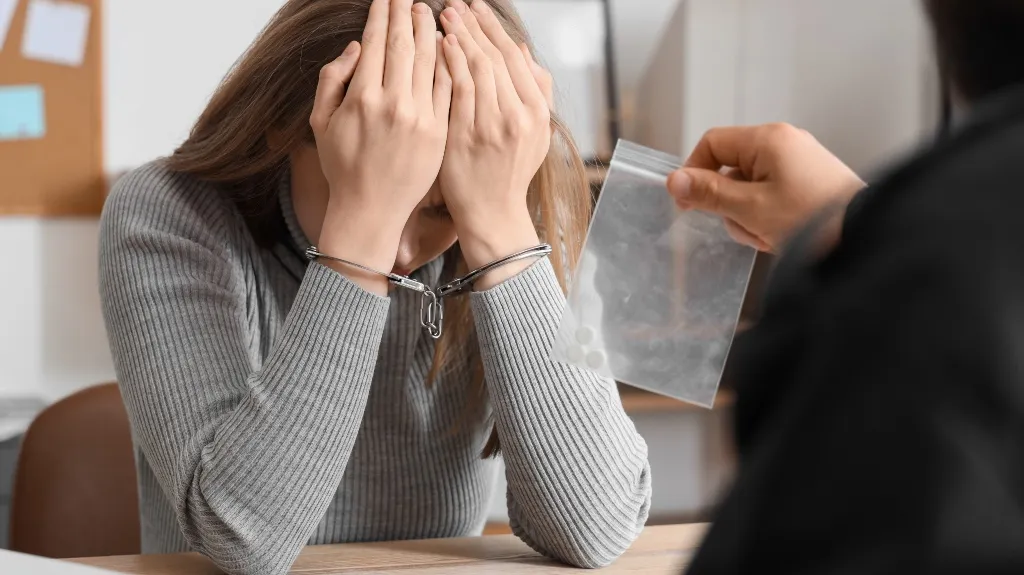
If you’ve been arrested for a drug DUI in Murrieta, Temecula, or anywhere in Southwest Riverside County, your case will be handled at the Southwest Justice Center and prosecuted by the Riverside County District Attorney’s office — and the most important thing to understand is something that works in your favor: California has no legal limit for drugs the way it does for alcohol. Unlike an alcohol DUI, where 0.08% blood alcohol is a hard line, a drug DUI under Vehicle Code § 23152(f) requires the prosecution to prove you were actually impaired — not merely that a substance was present in your blood. That applies whether the drug is marijuana, a prescription medication, or an illegal drug. A Murrieta drug DUI attorney should be able to tell you early how strong the impairment evidence really is, because in these cases it is often far weaker than an arrest makes it look.
Our office has defended DUI charges at the Southwest Justice Center for more than 25 years, for clients across Murrieta, Temecula, Menifee, Lake Elsinore, Wildomar, Winchester, Canyon Lake, and French Valley. Drug DUI cases rest on subjective evidence — an officer’s observations, field sobriety tests, and a blood test that doesn’t measure impairment — and each of those is open to challenge.
Key Takeaways
- There is no per se (legal) limit for drugs in California. Unlike the 0.08% alcohol limit, the prosecution must prove you were actually impaired — not just that a drug was in your system.
- A drug DUI under Vehicle Code § 23152(f) covers marijuana, prescription medication, and illegal drugs alike. A valid prescription is not a defense if the medication impaired your driving.
- The evidence is subjective — roadside observations, field sobriety tests (not validated for drugs), a Drug Recognition Expert’s opinion, and a blood test that shows presence, not impairment. Each piece is challengeable.
- A first drug DUI is a misdemeanor; penalties escalate with prior offenses, and a drug DUI causing injury under Vehicle Code § 23153 is a wobbler that can carry a strike.
- Two clocks start at arrest: a 10-day deadline to request a DMV hearing, and the criminal case itself — which is why early review matters.
What Counts as a Drug DUI in California
Under California Vehicle Code § 23152(f), a drug DUI means driving while actually impaired by any drug. It is the impairment that makes it a crime, not the substance — which is why taking a medication exactly as prescribed is not a defense if it impaired your driving.
A drug DUI doesn’t require an illegal drug. Under Vehicle Code § 23152(f), it is unlawful to drive under the influence of any drug, which falls into three broad categories:
- Marijuana. Legal to use recreationally under Proposition 64 — but driving while impaired by it is still a crime. Legal use is not a defense to impaired driving.
- Prescription medication. This surprises people the most: you can be charged with a drug DUI for driving while impaired by a medication your doctor prescribed and you took exactly as directed. Sleep aids, anti-anxiety medications, and pain medications are common examples. A valid prescription does not excuse driving while actually impaired.
- Illegal drugs. Any controlled substance.
A separate statute, Vehicle Code § 23152(g), covers driving under the combined influence of alcohol and a drug. In every version, “under the influence” has a specific meaning: the drug has to have actually impaired your ability to drive with the caution of a sober person using ordinary care. The charge also applies only to driving on a public road, not on private property. As the next section explains, proving that impairment is much harder than most people arrested for this assume.
The Key Difference: No Per Se Limit for Drugs
Unlike alcohol’s 0.08% limit, California sets no blood-concentration limit for any drug. There is no THC level, and no level of any medication, that automatically proves impairment. Because a drug can stay in your blood long after its effects have worn off, the prosecution must prove you were actually impaired while driving — not merely that a drug was present.
This is the single most important fact in a drug DUI case. For alcohol, the law sets a per se limit — 0.08% blood alcohol — and being at or above it is itself the offense. For drugs, there is no equivalent limit. There is no blood concentration of marijuana, a prescription medication, or any other drug that automatically means you were impaired.
That matters because the mere presence of a drug in your blood does not prove impairment. Marijuana is the clearest example: THC can linger in the bloodstream for days or even weeks after any impairing effect has worn off. But the same gap exists across the board — many prescription and other drugs remain detectable long after they stop affecting you, and detected levels don’t translate cleanly into “impaired.” A blood test can confirm that a drug is present; it generally cannot establish that you were impaired at the moment you were driving.
Because of that gap, the prosecution can’t simply point to a number. It has to prove actual impairment through an officer’s observations, field sobriety tests, and expert testimony — all of which are contestable. The absence of a per se limit is precisely what makes these cases defensible, and it is the first thing we examine: what, beyond the presence of a drug, does the prosecution actually have?
How Police Build a Drug DUI Case — and Where It’s Weak
Without a chemical limit to rely on, officers assemble a drug DUI case from subjective pieces: roadside observations, field sobriety tests that were never validated for drugs, a Drug Recognition Expert’s opinion, and a blood test that detects presence but not impairment. None of these measures impairment directly, and each one is open to challenge.
When an officer suspects drug impairment, the investigation follows a different path than an alcohol stop, and each step has weaknesses:
- Roadside observations. Officers look for things like the smell of marijuana, red or watery eyes, slowed speech, or unusual behavior. These are subjective and have innocent explanations — allergies, fatigue, a medical condition, the time of day. (One supposed marijuana “sign,” a green tongue, has no scientific basis at all.)
- Field sobriety tests. The standardized field sobriety tests were designed and validated for alcohol impairment, not drugs, and they’re affected by nerves, footwear, surface, and the officer’s instructions. Whether you can even be required to take them — and what your refusal means — is its own question, covered in our discussion of refusing a field sobriety test.
- Drug Recognition Expert (DRE) evaluations. A specially trained officer may perform a standardized 12-step evaluation and offer an opinion on whether you’re impaired and by what category of drug. But a DRE’s conclusion is an opinion, not scientific proof — and if the officer skipped steps, departed from the protocol, or attributed a medical condition or fatigue to drug use, the entire evaluation can be challenged.
- Chemical testing. Because a breath test detects only alcohol, drug DUIs rely on a blood test (or urine if blood isn’t available). How that blood was collected, stored, and analyzed is governed by strict regulations (Title 17 of the California Code of Regulations), and violations of those procedures can undermine the results.
The common thread is that none of this measures impairment directly. That’s the opening.
Penalties for a Drug DUI
A drug DUI is punished on the same penalty ladder as an alcohol DUI, and the exposure escalates with each prior offense within ten years. A first offense is a misdemeanor; a fourth offense within ten years — or any drug DUI with a prior felony DUI — becomes a wobbler that can be charged as a felony.
- First offense (misdemeanor): 96 hours to six months in county jail, a fine of roughly $390 to $1,000 plus assessments, three to five years of probation, a DUI education program, and a driver’s license suspension.
- Second offense within ten years (misdemeanor): 90 days to one year in jail, with longer license consequences.
- Fourth offense within ten years, or any drug DUI with a prior felony DUI: a wobbler that can be charged as a felony, carrying felony-level exposure.
A drug DUI that causes injury to another person can be charged under Vehicle Code § 23153 as a wobbler, with substantially greater exposure — the realm of felony DUI causing injury, which carries a strike when the injury is serious. And under California’s implied consent law (Vehicle Code § 23612), refusing the required chemical test after a lawful arrest triggers its own penalties — a one-year license suspension for a first refusal, and the refusal can be used against you in court.
Where a Drug DUI Case Is Heard in Southwest Riverside County
Drug DUI cases arising in Murrieta, Temecula, Menifee, Lake Elsinore, Wildomar, Winchester, Canyon Lake, or French Valley are heard at the Southwest Justice Center in Murrieta — the local branch of the Riverside County Superior Court — and prosecuted by the Riverside County District Attorney’s office. A separate DMV process can suspend your license, and you generally have only 10 days from the arrest to request a DMV hearing.
There’s also a parallel track most people don’t realize is running: the DMV moves to suspend your license separately from the court case, and you generally have only 10 days from the arrest to request a DMV hearing before that suspension takes effect.
Local knowledge matters in these cases. How the SWJC and the local prosecutors handle the no-per-se-limit problem, how particular judges view DRE testimony, and how blood evidence tends to be litigated here are all things learned by working in that courthouse. Attorney Nic Cocis has appeared at the Southwest Justice Center on a near-weekly basis since 1999.
Defenses to a Drug DUI
The strongest drug DUI defense is the absence of proof of actual impairment, because a detected drug level does not establish that you were impaired while driving. Other defenses challenge the DRE evaluation, the field sobriety tests, the blood-testing procedure under Title 17, and the legality of the stop or arrest.
Because the prosecution has to prove actual impairment, the defenses in these cases are often stronger than in alcohol cases:
- No proof of actual impairment. The central defense. The presence of a drug is not impairment, and a toxicologist can testify that a detected level doesn’t establish you were impaired while driving.
- Challenging the DRE. The evaluation is subjective and opinion-based; deviations from the 12-step protocol, officer bias, and innocent explanations for the “signs” all undercut it.
- Field sobriety test problems. These tests aren’t validated for drugs and are affected by factors that have nothing to do with impairment.
- Blood-testing violations. Errors in how the sample was drawn, stored, or analyzed under Title 17 can render the results unreliable.
- No reasonable suspicion or probable cause. If the stop or arrest was unlawful, the evidence that followed can be suppressed.
- Involuntary intoxication or unexpected reaction. Being unknowingly given a substance — or suffering an unexpected reaction to a properly taken medication — can support a defense.
When we review a drug DUI case, impairment is where we focus first — because if the prosecution can’t connect the drug in your blood to your actual driving, the case has a serious problem.
Why a Murrieta Drug DUI Attorney Matters Early
Drug DUI cases are shaped early, and two clocks start running at the arrest. The DMV’s 10-day deadline to request a hearing can mean an automatic license suspension if it’s missed. And on the criminal side, the impairment evidence — the DRE evaluation, the field sobriety tests, the blood draw — is most effectively challenged when it’s examined while it’s fresh. Whether the prosecution can actually prove impairment, as opposed to mere presence, is the question the whole case turns on.
Most importantly, because these cases rest on subjective evidence, the early account of the stop and what you say to officers can shape everything that follows. These are the questions a Murrieta drug DUI attorney who knows the Southwest Justice Center should be working through with you right away, not at trial.
The Law Office of Nic Cocis defends drug DUI charges — marijuana, prescription medication, and controlled substances, including breath and blood test and DUI evidence challenges — at the Southwest Justice Center, for clients throughout Murrieta, Temecula, Menifee, Lake Elsinore, Wildomar, Winchester, Canyon Lake, and French Valley. Our case results page shows how cases like this are handled.
If you’ve been arrested for a drug DUI, call the Law Office of Nic Cocis at (951) 400-4357 for a free, confidential consultation.
Frequently Asked Questions About Drug DUI in California
Is there a THC limit for driving in California?
No. California has no per se THC limit for driving. There is no blood concentration of THC that automatically proves impairment. The prosecution must prove you were actually impaired while driving — not merely that THC was present in your blood.
Can you get a DUI for prescription drugs in California?
Yes. Vehicle Code § 23152(f) applies to any drug that impairs driving, including a medication taken exactly as prescribed. Sleep aids, anti-anxiety medications, and pain medications are common examples. A valid prescription is not a defense to driving while actually impaired.
How do police test for a drug DUI?
Because a breath test detects only alcohol, drug DUIs rely on a blood test (or urine if blood is unavailable), usually combined with a Drug Recognition Expert evaluation and field sobriety tests. None of these measures impairment directly, and each one can be challenged.
What is a Drug Recognition Expert (DRE)?
A DRE is an officer trained to perform a standardized 12-step evaluation and give an opinion on whether a driver is impaired and by what category of drug. A DRE’s conclusion is an opinion, not scientific proof, and deviations from the protocol can undermine it.
What are the penalties for a first drug DUI in California?
A first drug DUI is a misdemeanor. It is punishable by up to six months in county jail, roughly $390 to $1,000 in fines plus assessments, three to five years of probation, a DUI education program, and a driver’s license suspension.
Can a drug DUI be charged as a felony?
Yes. A drug DUI becomes a wobbler — chargeable as a felony — on a fourth offense within ten years or with a prior felony DUI. A drug DUI that causes injury can be charged under Vehicle Code § 23153, which carries a strike when the injury is serious.