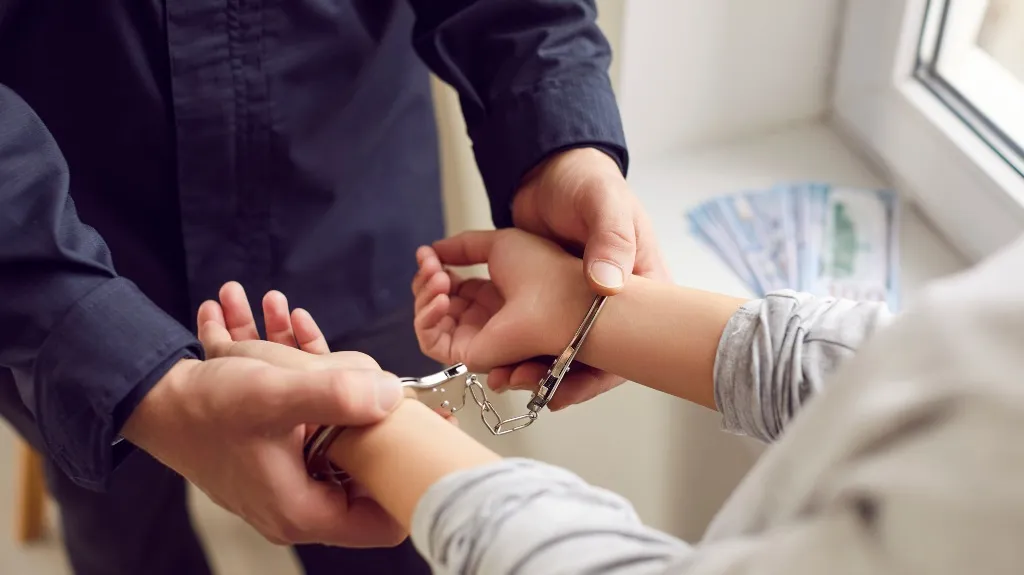
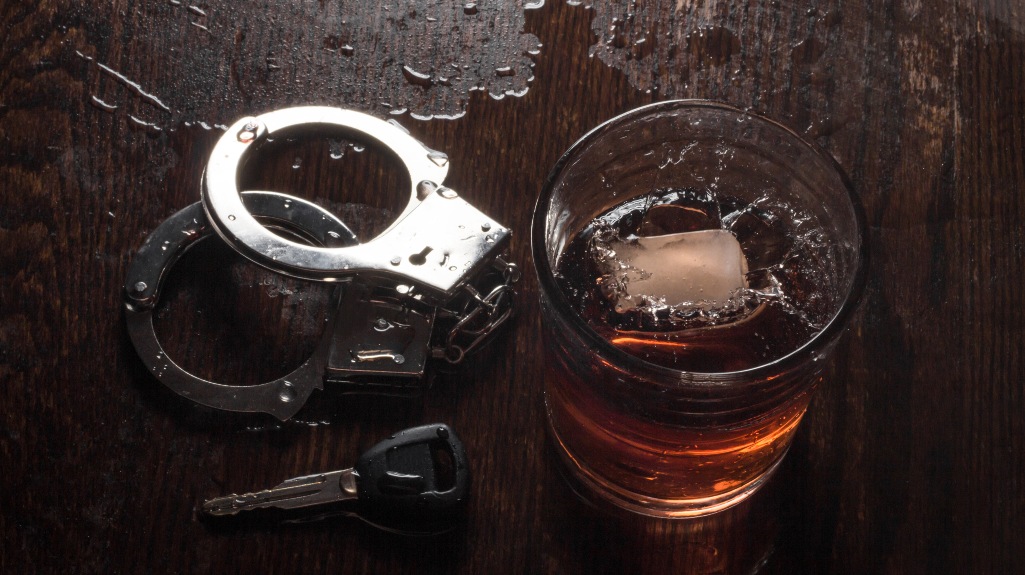
A DMV hearing after a DUI arrest is one of the most procedurally distinctive proceedings in California law. It is administrative rather than criminal. The decisionmaker is a DMV employee rather than a judge. The standard of proof is preponderance of the evidence rather than beyond a reasonable doubt. The rules of evidence are relaxed. And the hearing officer typically plays multiple roles — investigator, prosecutor, evidence custodian, and adjudicator — all in a single proceeding. The single most consequential deadline runs 10 calendar days from the arrest, and failure to request the hearing within that window forfeits the right to challenge the Administrative Per Se (APS) license suspension at the agency level entirely. If you were arrested for DUI in Murrieta, Temecula, Menifee, Lake Elsinore, Wildomar, Winchester, Canyon Lake, or French Valley, your criminal case will be filed at the Southwest Justice Center in Murrieta — but the DMV hearing process runs entirely separately, on its own track, on its own timeline. This post covers the DMV hearing specifically. For the chemical testing law that the hearing officer interprets, see our implied consent post; for the full first-time DUI overview, see the first-time DUI hub.
The 10-Day Deadline — How It Actually Works
The most common misunderstanding about a DUI arrest is the timing of the license suspension. Many people believe the license is “immediately” suspended at arrest. That is not how the system works.
At the time of arrest, the officer takes the physical California driver’s license, issues a pink Order of Suspension and Temporary License (DS 367 form), and this document serves as a temporary 30-day driving license. The driver remains lawfully licensed for those 30 days. After day 30, the Administrative Per Se suspension is scheduled to take effect — UNLESS the driver has requested a DMV hearing.
If a hearing is requested within 10 calendar days of the arrest, the suspension is stayed pending the hearing outcome. The temporary license continues to function until the hearing officer issues a decision, even if that decision comes weeks or months after the original 30-day window expires. This stay is the most important practical benefit of timely requesting the hearing — it preserves driving privileges throughout the proceeding regardless of how long the hearing takes to schedule and decide.
The 10 days are calendar days, not court days. They run from the date of arrest, not from the date of release, the date of any later notice, or any other event. A driver arrested on a Friday has until the second Monday to request the hearing — including weekends and holidays in the count.
The hearing is requested by contacting the Driver Safety Office that handles Riverside County cases. The request can be made by telephone (the most common method) and a hearing date is typically scheduled 30 to 90 days out. A written confirmation is sent to the driver.
The Murrieta DUI DMV Hearing — How It Actually Works
Several procedural features make the DMV hearing structurally different from anything that happens in criminal court.
The decisionmaker is a Driver Safety Hearing Officer, not a judge. This officer is a DMV employee, typically based at the Driver Safety Office, with administrative training rather than judicial training. The hearing officer plays multiple roles in the same proceeding — they introduce the agency’s evidence, examine witnesses, decide objections, weigh credibility, and issue the final decision. The officer does not have the procedural neutrality of a judge.
The burden of proof is preponderance of the evidence under Vehicle Code § 13558. This is “more likely than not” — substantially lower than the beyond-a-reasonable-doubt standard that applies in criminal court. Many DUI cases that end in acquittal or dismissal in criminal court nonetheless result in sustained APS suspensions at DMV, because the lower burden allows the agency to prevail on weaker evidence.
The formal rules of evidence do not apply. Hearings are governed by the California Administrative Procedure Act (Government Code § 11500 et seq.) rather than the Evidence Code that controls criminal trials. Hearsay is generally admissible. Police reports come in as official records without requiring the officer’s testimony in most cases. Chemical test results come in through laboratory affidavits without live analyst testimony.
Hearings are typically conducted telephonically. Most DMV hearings in California are now held by telephone rather than in person. The hearing officer, the driver, the defense attorney, and any witnesses participate by phone. The hearing is recorded.
No jury, no public attendance. The hearing is closed to the public and decided by the hearing officer alone.
A typical DMV hearing lasts 1 hour. The hearing officer first introduces the agency’s documentary evidence into the record, then takes any defense evidence and testimony, then allows brief argument, and finally takes the matter under submission. A written decision is typically issued within 15 days.
The Four Issues at an APS Hearing
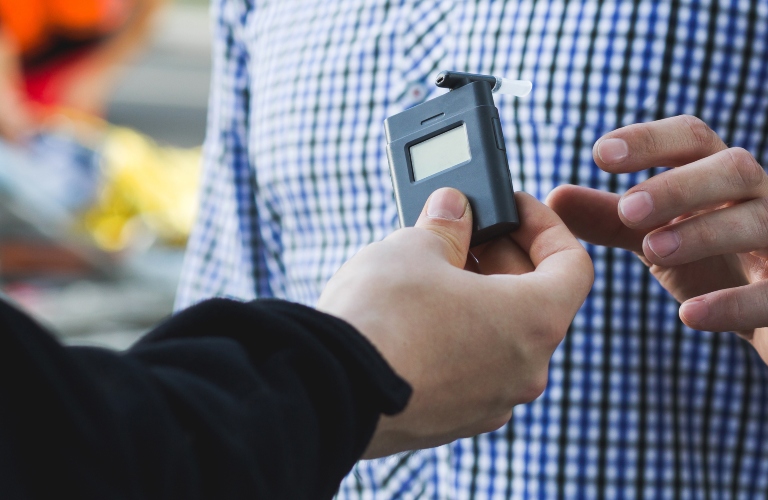
For an APS hearing on a 0.08% (or higher) BAC suspension, the hearing officer must decide four specific issues under Vehicle Code § 13557. Each is an independent ground for set-aside — if the agency fails to prove any one of them by a preponderance, the suspension must be set aside.
Issue 1: Did the peace officer have reasonable cause to believe the driver was driving in violation of Vehicle Code § 23152 or § 23153? This addresses the legality of the underlying detention and arrest. The traffic stop must have been lawful; the officer’s basis for suspecting DUI must have been reasonable; the indicia of impairment observed (driving pattern, physical signs, FST performance) must support the inference.
Issue 2: Was the driver lawfully arrested? Probable cause for the DUI arrest specifically must have existed at the moment of arrest. This is a separate constitutional question from the reasonable-cause-to-investigate question in Issue 1.
Issue 3: Was the driver advised that failure to complete or refusal to take a chemical test would result in license suspension or revocation? The implied consent admonition must have been read accurately, in a language the driver understood, and the driver must have been given an opportunity to acknowledge understanding. Defective admonition is one of the most common grounds for set-aside.
Issue 4: Was the driver driving with 0.08% BAC or higher? This is the substantive impairment element — addressed through chemical test results, witness testimony about driving, and any expert evidence on absorption, elimination, or partition ratio.
Each of these is a separate defense angle. Substantive challenges to the chemical test framework (Title 17 compliance, 15-minute observation, calibration records, partition ratio defenses) belong primarily to Issue 4 and are covered in detail in our challenging DUI evidence post.
Refusal Hearings — Additional Issues
For an APS hearing arising from a chemical test refusal under Vehicle Code § 13353, the hearing officer addresses the same first three issues above, but Issue 4 changes — instead of proving the BAC level, the agency must prove the refusal element. Additional sub-issues are addressed in refusal cases:
- Whether the officer told the driver that chemical testing was required as a condition of driving privilege
- Whether the driver actually refused or failed to complete the test
- Whether the demand for chemical testing was lawful (typically requires prior lawful arrest)
- Whether the driver had the physical or mental capacity to understand the admonition and the consequences
A refusal documented by the arresting officer can still be defeated at the hearing if the admonition was inadequate, the driver was medically unable to complete the test, language barriers existed, or the underlying arrest itself was unlawful.
Discovery and Evidence at the DMV Hearing
The agency’s evidence package typically includes the arrest report (DS 367), the officer’s narrative report, the chemical test results, the implied consent admonition form, and the suspension order. These come in as official records — the hearing officer admits them without requiring authenticating testimony in most cases.
The defense has two main mechanisms for developing additional evidence:
Administrative subpoena under Vehicle Code § 14108. Counsel can subpoena the arresting officer to appear at the hearing for cross-examination. This is the single most powerful defense tool — when the officer appears, the defense can probe inconsistencies in the police report, weaknesses in the admonition process, gaps in the chain of probable cause, and any other factual issues. When the subpoenaed officer does not appear at the hearing, the result is often a set-aside — the agency cannot prove its case without the officer’s testimony, and the hearing officer must either continue the hearing or set the suspension aside.
Continuance requests. Either party can request continuance to gather additional evidence, obtain records, or accommodate scheduling. Continuance requests are generally granted on reasonable grounds. During the continuance, the temporary license stay remains in effect.
The defense can also introduce its own evidence — expert testimony on partition ratio or absorption phase, witness testimony about driving conduct, medical records establishing a condition that affected chemical test reliability or admonition comprehension, and so forth.
Defense Strategies at the Hearing
Effective DMV hearing defense engages multiple fronts simultaneously.
Probable cause challenges. The traffic stop and arrest must have been lawful at every stage. Pretextual stops, defective stop justifications, lack of observable indicia of impairment, and similar issues all create Issue 1 / Issue 2 defenses.
Admonition challenges. The implied consent admonition must be read accurately. Mumbled delivery, partial recitation, language barriers without translation, or driver confusion can all defeat the agency’s proof on Issue 3.
Chemical test challenges. Title 17 compliance, 15-minute observation period, calibration records, partition ratio, rising BAC, and chain of custody all attack Issue 4. The full evidence-challenge framework is in our challenging DUI evidence post.
Mercer / no-driving defenses. For cases where the vehicle was not observed in motion, California’s volitional-movement requirement under the Mercer rule applies at the DMV hearing the same as in criminal court. The DMV must prove the driver actually drove the vehicle, not merely had physical control. This applies in parked-car cases and is detailed in our parked car DUI post.
Constitutional challenges. Fourth Amendment violations in the stop or arrest, Fifth Amendment violations in custodial questioning, Birchfield-related warrant issues for blood draws — all available at the DMV hearing under appropriate factual circumstances.
Outcomes — Set-Aside or Sustain
The hearing officer’s decision falls into one of two categories.
Set aside. The APS suspension is canceled entirely. The driver’s license is restored to its full pre-arrest status. Common grounds for set-aside include failure of the arresting officer to appear, defective admonition, lack of probable cause for the arrest, Title 17 violations affecting chemical test reliability, and constitutional violations in the stop or arrest. A set-aside at the DMV level does not stop the criminal case from proceeding, but it does signal weakness in the prosecution’s evidence and often shifts negotiating posture in the criminal court.
Sustain. The APS suspension takes effect according to its statutory length. For a first DUI with BAC 0.08% or higher, the suspension is 4 months under VC § 13353.2. For a refusal first offense, the suspension is 1 year under VC § 13353. For repeat offenses within 10 years, the suspension period extends. The hearing officer does not generally “modify” the suspension length — the length is set by statute based on the driver’s record, not by the officer’s discretion.
Written decisions are typically issued within 15 days of the hearing. The decision is sent by mail to the driver and counsel.
After the Hearing — Appeals and Reinstatement
Two appeal mechanisms exist for an adverse DMV decision.
Department Review under Vehicle Code § 14400. An administrative appeal to a chief or department review officer within the DMV. The request must be filed within 15 days of the hearing decision. Department Review is generally documents-only and operates within the agency, so reversal rates are limited. It is, however, sometimes successful in cases where the hearing officer made identifiable legal errors.
Court appeal / writ of mandate under Vehicle Code § 14401 and Code of Civil Procedure § 1094.5. A writ petition filed in superior court seeking judicial review of the DMV decision. The court reviews the administrative record under the substantial evidence standard. This is the more substantive appeal route, particularly for legal-error cases, but it requires the filing fee, a complete certified administrative record, and additional litigation.
For drivers whose suspension is sustained, reinstatement follows the standard post-DUI process — completion of any required hard-suspension period, IID installation under Vehicle Code § 23575.5 (typically available for first-time DUI drivers after a short hard period), SR-22 financial responsibility filing, and payment of reinstatement fees. The full reinstatement framework is in our DUI license reinstatement post.
Talk to a Southwest Riverside County DUI Defense Attorney
A DMV hearing is procedurally different from any other proceeding in a DUI case, and the defense framework is different too — the lower burden of proof, the relaxed rules of evidence, the specific four-issue (or seven-issue) framework, and the unique opportunities created by officer non-appearance and admonition challenges all reward experienced administrative practice. The Law Office of Nic Cocis represents DUI clients across Southwest Riverside County — Murrieta, Temecula, Menifee, Lake Elsinore, Wildomar, Winchester, Canyon Lake, and French Valley — and appears at both the DMV Driver Safety Office and the Southwest Justice Center on the parallel tracks of a DUI case. With over 25 years of trial experience, attorney Nic Cocis handles DMV hearings and criminal DUI cases at every stage from the 10-day request through final disposition.
For a free, confidential consultation about a DMV hearing in Southwest Riverside County, call (951) 400-4357. The 10-day deadline runs from the date of arrest — counsel can request the hearing and stay the suspension on the same day you retain.